Loading interviews
Interview
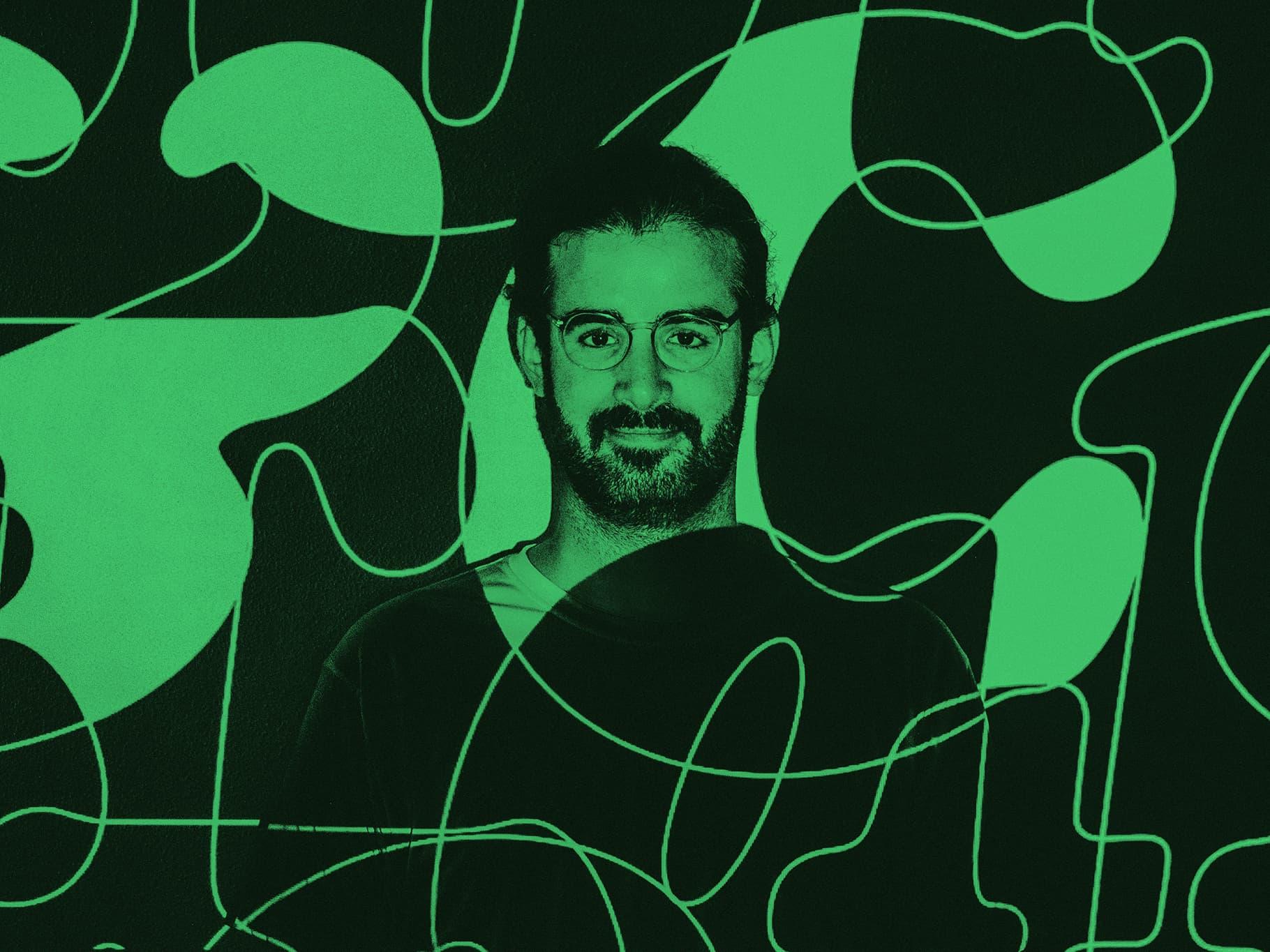
Embracing uncertainty in design through personal projects and community
Vittorio Perotti
27 October 2026
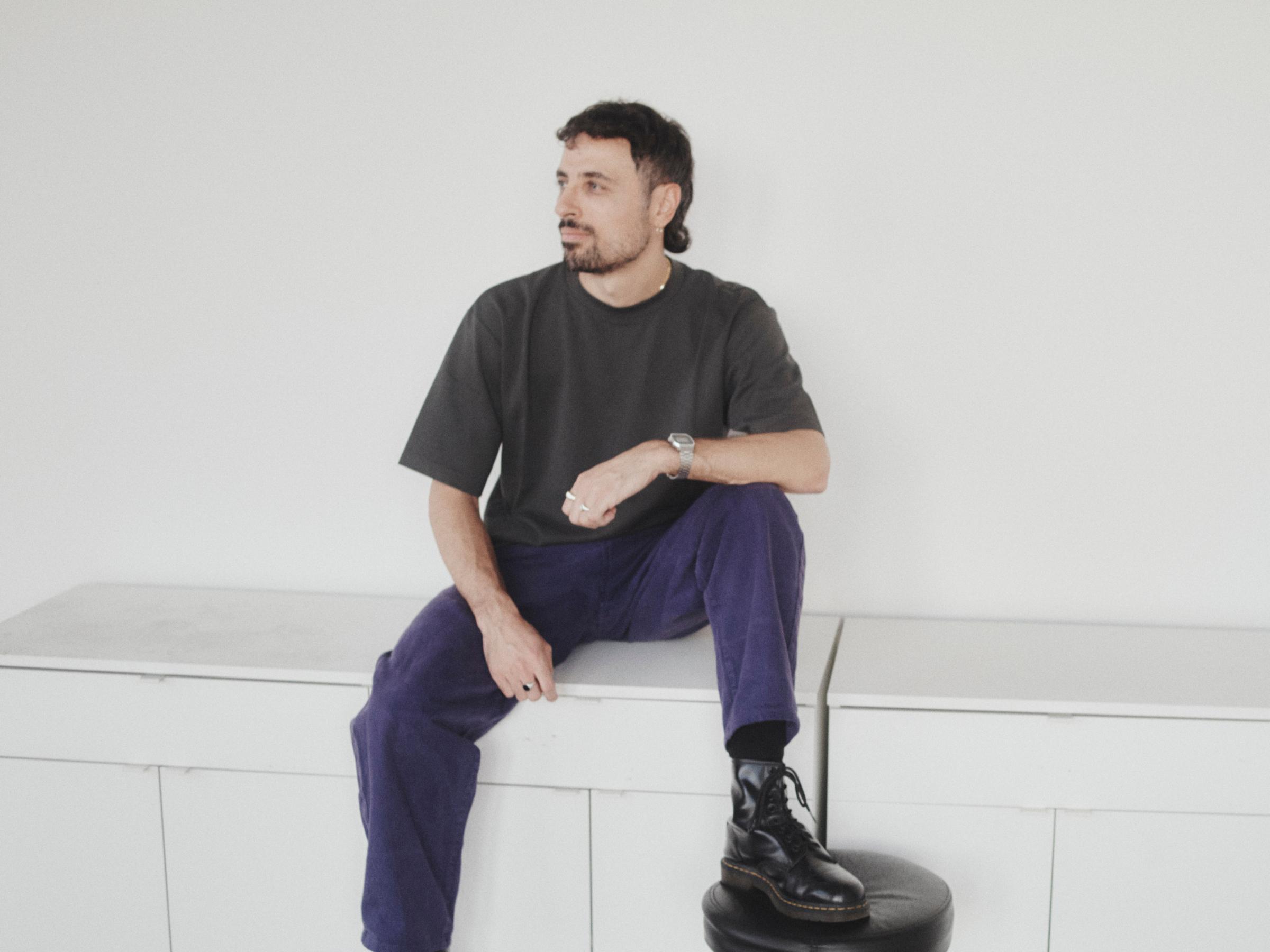
You grew up and studied in Italy before moving to New York. How do those two contexts coexist in your identity today, and how do they surface in the way you think about design?
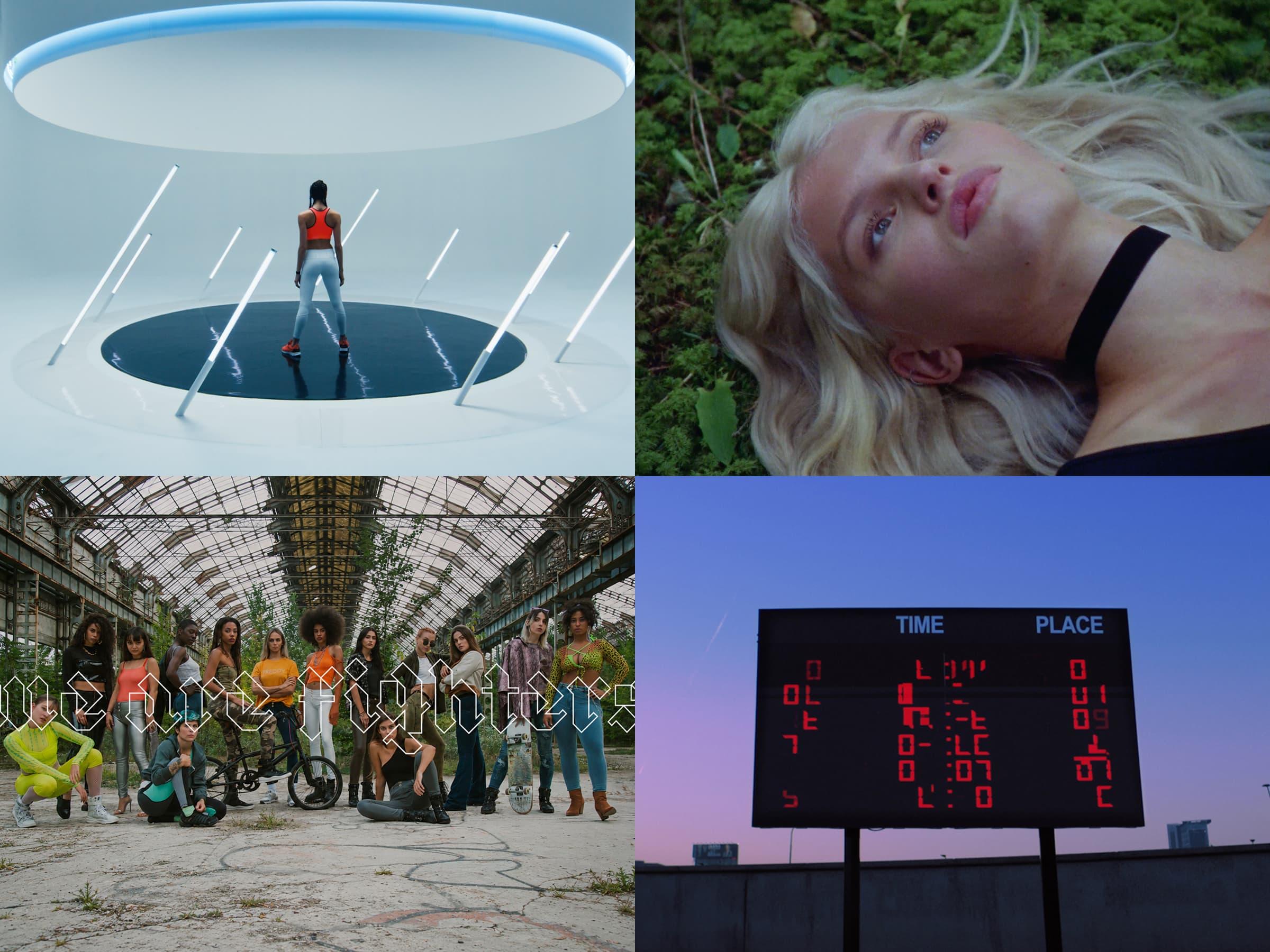
Italy gave me the problem-solving approach. I have always loved design, but the best design schools in Italy are in Rome and Milan, and I couldn't afford to move there after high school. So I enrolled in a humanities degree in Teramo. It was 52 kilometers from my hometown, just two more than the 50-kilometer minimum for an off-site scholarship, and that was enough to enable me to move out and live on my own. I never studied graphic design, but I had been designing since I was 14. Sometimes for fun and sometimes to help the local newspaper my father founded. I am not sure how much of this was a passion and how much was due to the lack of video games on my computer. Given my father's job, I only had Macintosh computers growing up, and software like Freehand, QuarkXPress, and Photoshop were the most fun I could find. After my degree, I finally made it to Milan, where I found out there was a way to get paid for being creative, and that's how I started my advertising career as an art director. My path was non-linear compared to most of my colleagues, and even if it could have been easier, I feel very enriched by my experience today.
When you first arrived in New York, what challenged or unsettled you the most, creatively or personally? How did that moment of friction begin to reshape your perspective?
The biggest challenge was moving here from a different continent without the security of a full-time job. I was 30; I was already working as a creative director for some big brands, and I had just started YOHOHO Studio with some of my best friends. I wasn't actually looking for a big move, but it happened, and whether to accept this challenge was never a question for me. New York can be very unsettling because it is very competitive. It is hard to explain to someone who hasn't lived here, but at some point you realize there is space for everyone, and even though the city still challenges you after ten years, you still feel you are in the same boat as every New Yorker, and that is what makes it special.
Once you were in New York, you started working at Sagmeister & Walsh. What did that environment reveal to you about design, and about yourself, that you hadn’t encountered before?
I am incredibly happy I had the chance to work with Sagmeister & Walsh. My partner and I worked on a personal project that caught the studio's attention, and they hired us for a similar one. The crazy thing is that this studio had always been my dream job in New York, so when they reached out to us, it was one of my biggest glitch-in-the-matrix moments. Everyone I met during the few months I spent there was very talented, and I really felt like I was playing in the Champions League (or at least that's how I explained it to my father). That experience changed the way I look at design and art direction. I learned something from everyone in the studio, and what struck me most was that people supported each other instead of competing. Ten years later, we are still friends.
After that experience, you began co‑creating your own spaces, including cultural spaces like Salotto NYC and Liberazione.day. What pushed you in that direction, and what were you looking for that you couldn’t find elsewhere?
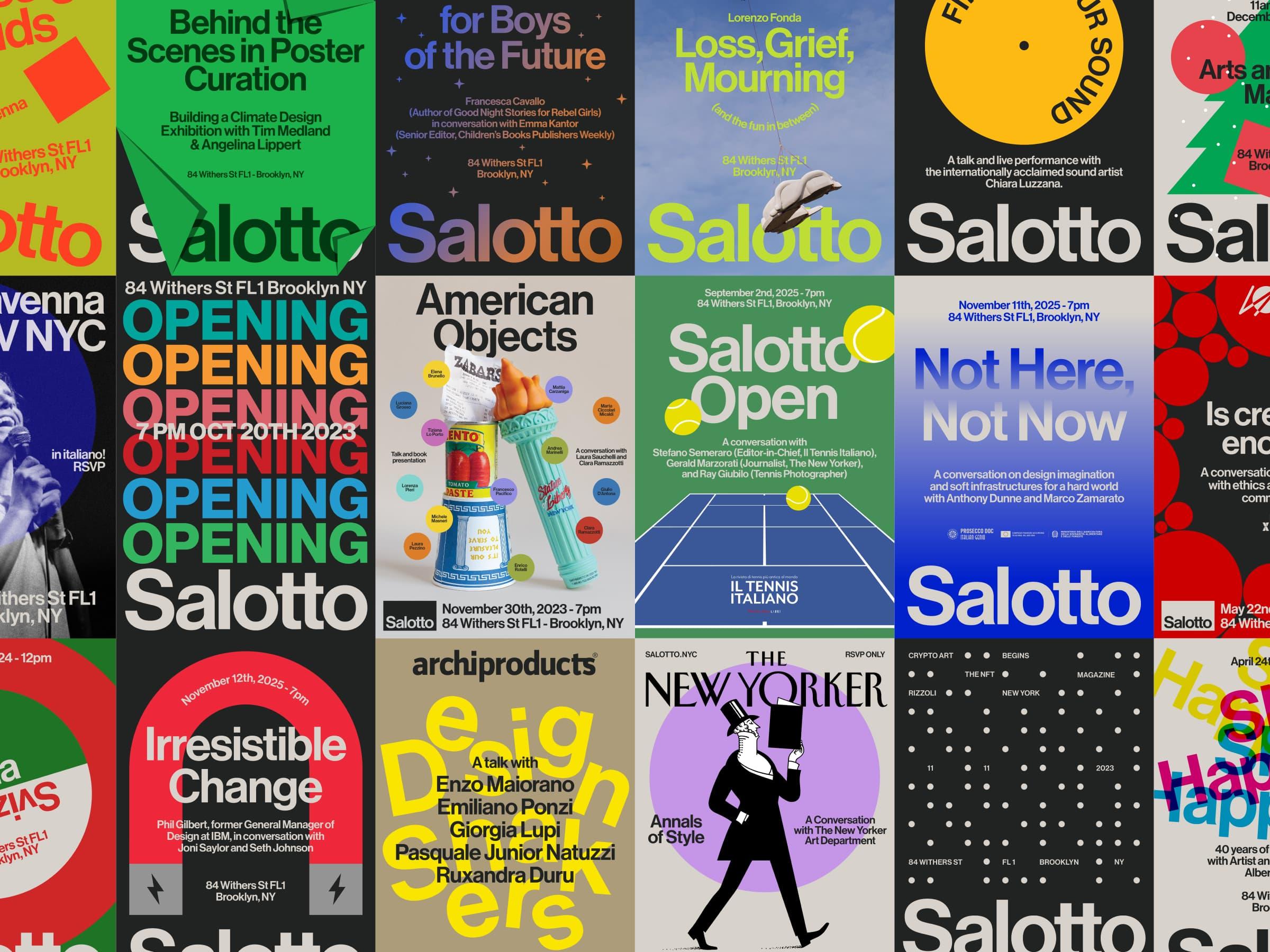
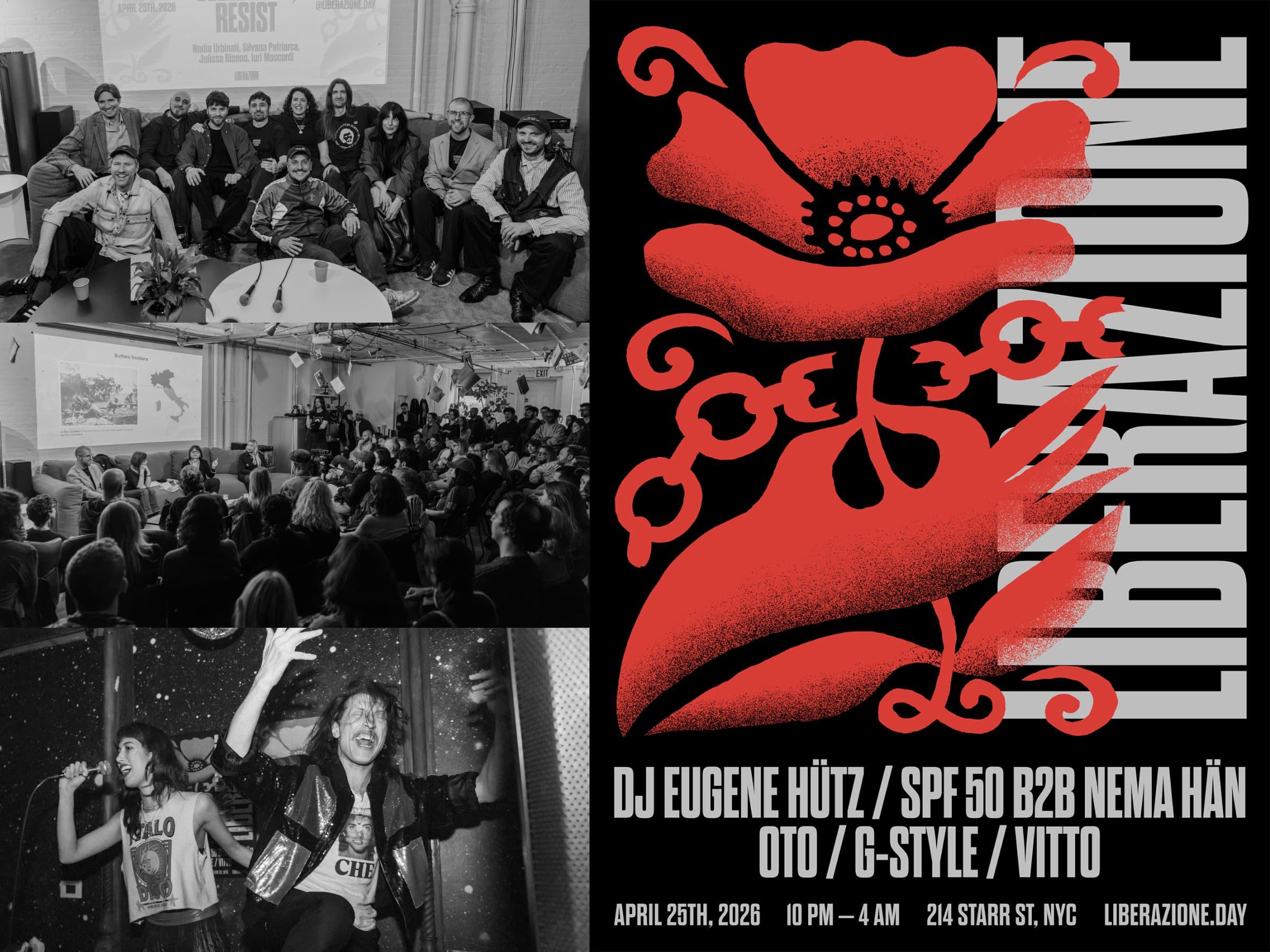
Over the years, I've had many answers to the question of why I love New York, but the one that sums them all up is: people. This is not just a metropolis; it's the sum of hundreds of communities living together in what feels like a small prototype of a global society. After the pandemic, I started sharing a studio with some Italian friends. It quickly became a meeting point for a bigger community, so much so that when our lease ended, we moved to a space three times its size. I proposed calling it "Salotto", and we started hosting events in our living room. When I designed the logo and the first posters, I would've never imagined what was going to happen. In three years, we organized more than 60 events, all free, with fascinating guests who enjoyed being with us: artists, designers, illustrators, curators, journalists, entrepreneurs, musicians, and comedians — all sharing their ideas with our audience. More than that, we built a big community that keeps coming back and brings friends to every event. Last year I started "Liberazione", a new collective to celebrate April 25th, Italy's Liberation Day, in New York. The result was a one-day festival with free afternoon talks by experts on the Italian Resistance, and an evening party with internationally renowned artists to raise funds for an association that helps migrants. It was a successful and enriching experience, so we decided to repeat it annually and to create other events throughout the year. I can say that New York has been a very warm and fertile place for building communities, and only by doing it did I discover how much I love it.
Make personal projects. It worked for me, and I’m sure it will work for many others.
Now, when you approach a project without a clear starting point, how do you navigate that uncertainty? What habits, tools, or ways of thinking have stayed with you through all these different phases?
I've learned to like uncertainty. With my character, it's almost impossible to be 100% sure of any decision, so I had to embrace it. Sometimes the right solution is the first one, and sometimes it takes a lot of trial and error. Other times it's more about aesthetics than logic, and I've learned that's not a bad thing either. One habit that has stayed with me is making personal cultural projects on the side. The beauty of it is that they start contaminating each other, and I begin making unexpected connections. Sometimes I'm researching for one project and end up solving another. It's a non-method; you can't do it on purpose, but when it works, everything seems to happen for a reason. Also, I never work alone for too long. Talking with people, whether it's my partner, my friends, or the community at Salotto, is still the fastest way I know to turn uncertainty into something real.
How do you perceive the current state of design education?
I know many brilliant colleagues who are teaching a new generation of talent, but unfortunately the best design schools are becoming elitist and extremely expensive. The hopeful part is the tools we have today. With enough curiosity and determination, you can learn almost anything. What matters is doing it with others: a group keeps you motivated, and it gives you people you trust to tell you the truth about your work.
In your opinion, what is the role of emerging graphic designers?
The graphic designer's job is changing even as I answer this question, and it's hard to imagine where we'll end up. Agencies no longer need young designers to work their way up, and clients need agencies less and less. The designer's role is still to solve problems; the difference is that now you also have to know how to find them. It's not easy, but it's exciting.
What advice would you offer to a young graphic designer entering the professional world today?
Make personal projects. It worked for me, and I'm sure it will work for many others. With AI, portfolios are starting to look more and more alike, and nobody really cares about technical skills anymore. A personal project, on the other hand, will always get noticed. It doesn't need to be a success; what matters is that it has a strong idea, carries real passion, and becomes somehow memorable.
Discover More
Structure enables creativity: bringing financial literacy into design
Vanessa Olt
Form as a way of thinking, geometry as a language of meaning
Sara Londoño
Balancing stimuli and a personal minimalist style through continuous exploration of the sign
Shweta Malhotra
Typography as an explorative practice between traditional design and the programming world
Pedro Neves