Loading journal
Diary
Highlights from 5+1 hosted by Propp
Pittogramma
15 September 2026
On June 11th, 5+1 landed at Propp, a design studio based in Milan founded by three friends: Pierluigi Anselmi, Pietro Buffa and Alessandro C. Busseni.
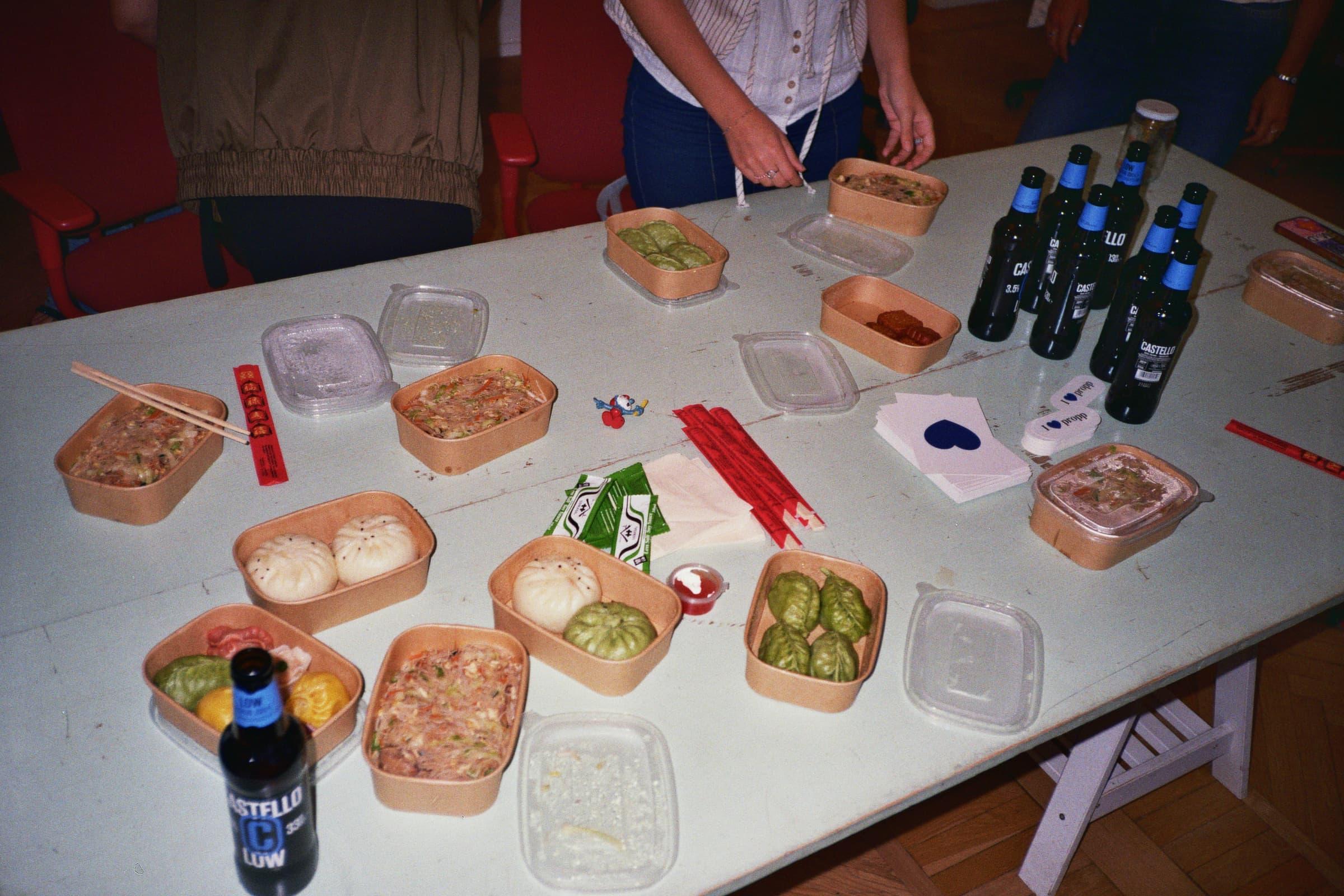
If you know them, even a little bit, you already know not to expect a normal evening. Their three personalities are explosive and deeply complementary, and even we had to adapt, so we swapped our usual pizza for Chinese food.
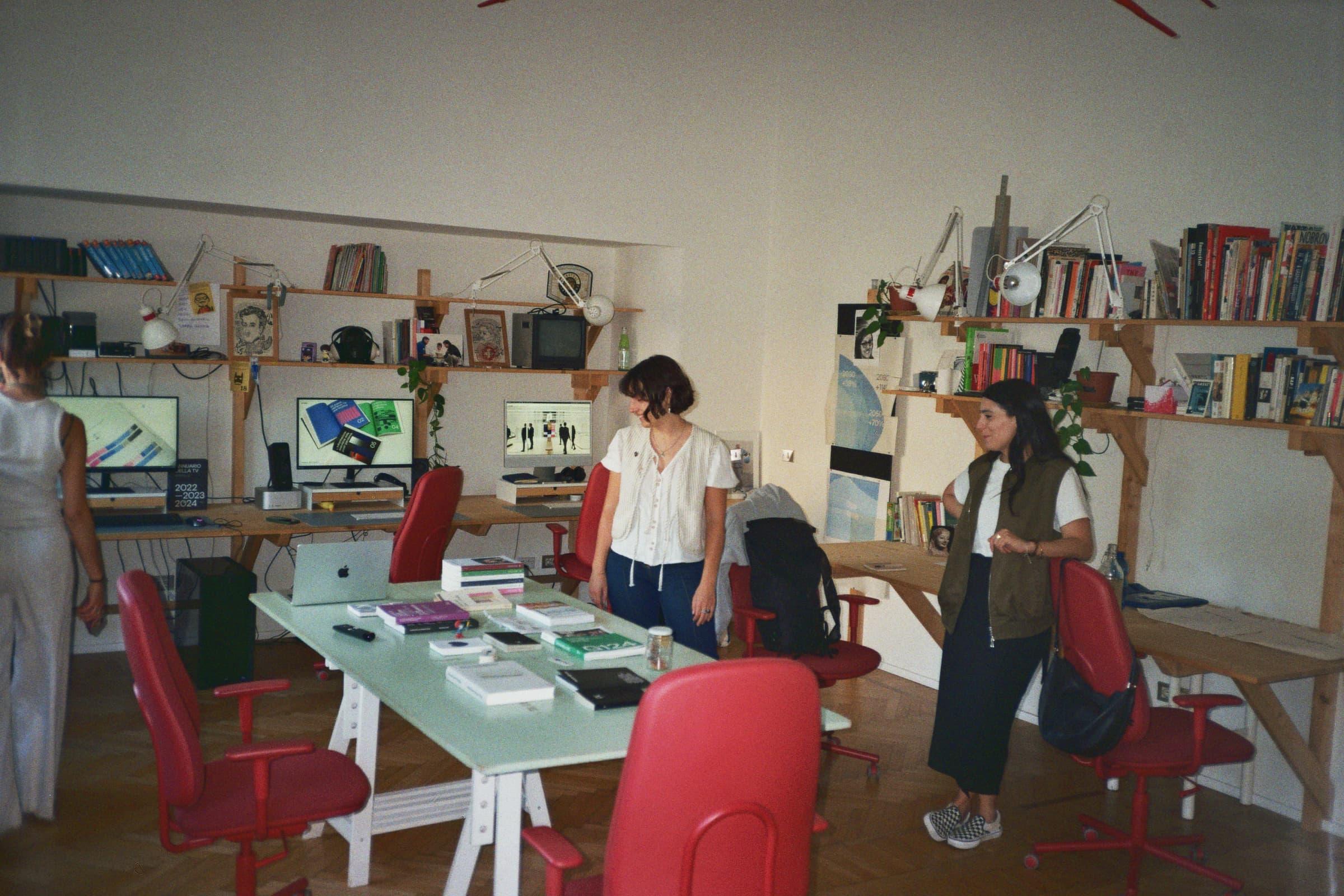
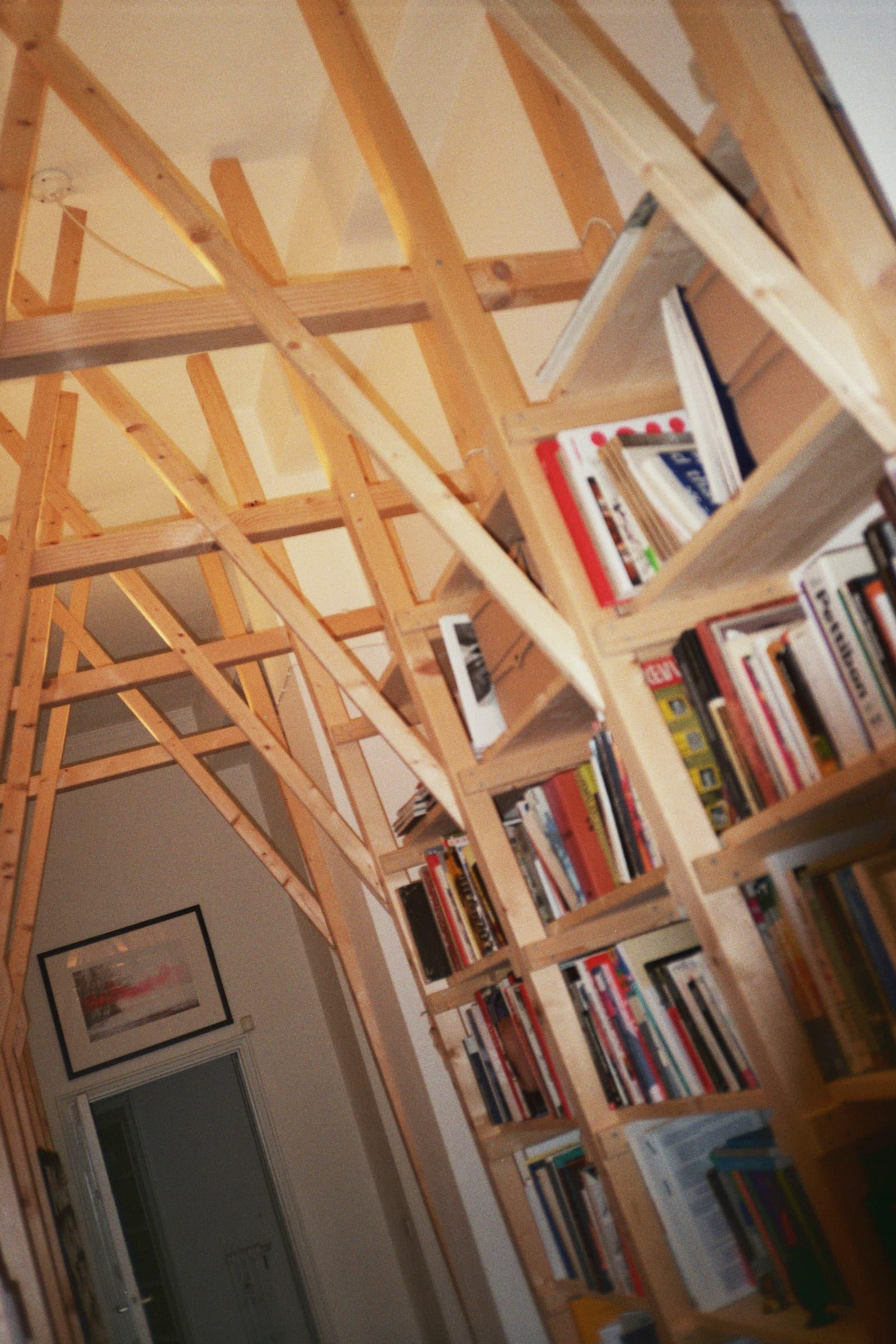
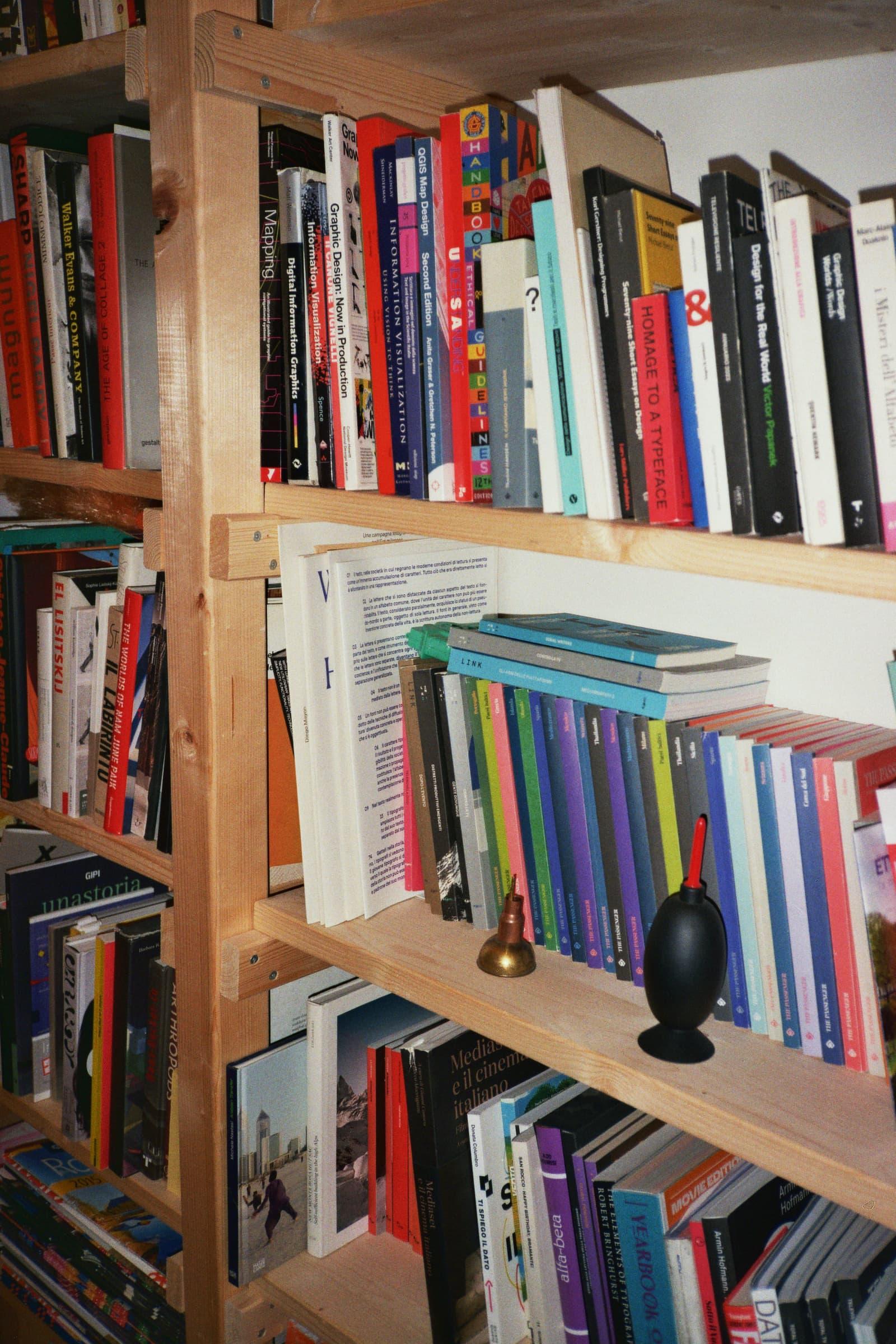
The studio is just as uncommon. It was designed by their friend Duilio Forte, artist and architect: a system of wood tables and shelves running from room to room, linking them through the walls, none of the tables touching the floor — a choice made purely to give the space more air.
Pier, Pietro and Ale didn't arrive here in a straight line, and that's really the story worth telling. About twenty years ago, the three of them were already working together under a different name, Minimum, a collective built around art and experimentation rather than business, something they did because they wanted to make things, not to make a living from it. When that ended, each went their own way for years, freelancing, moving between studios, until they found themselves sharing a workspace again in Isola. Still on separate projects, still not quite a studio, until, at some point, they decided to stop working side by side and start working together for real. The name they landed on, propp, is a nod to Vladimir Propp, the Russian linguist who studied the underlying structure of fairy tales: for them, a founding principle that a project should carry a structure and a story behind it, not just an aesthetic output.
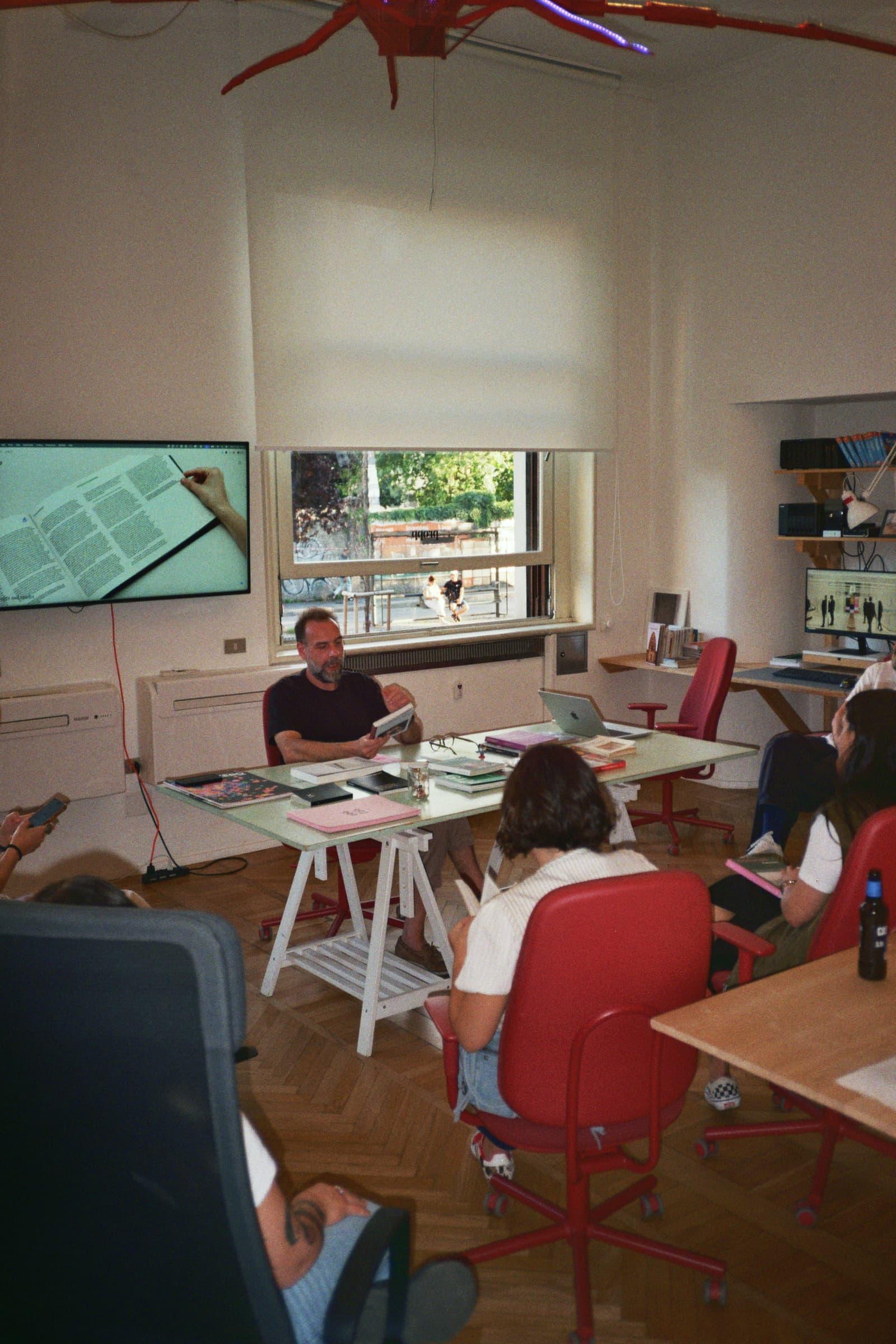
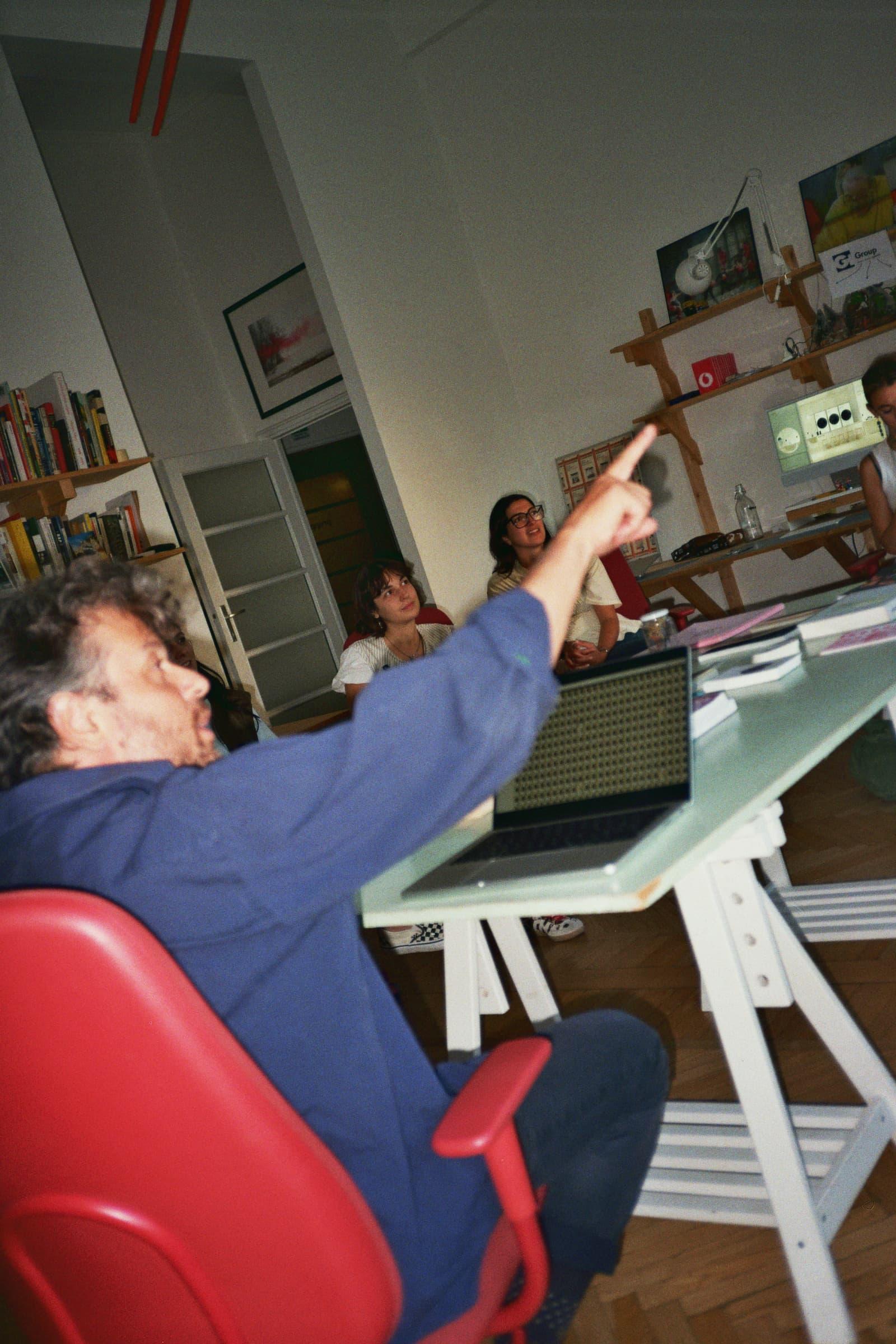
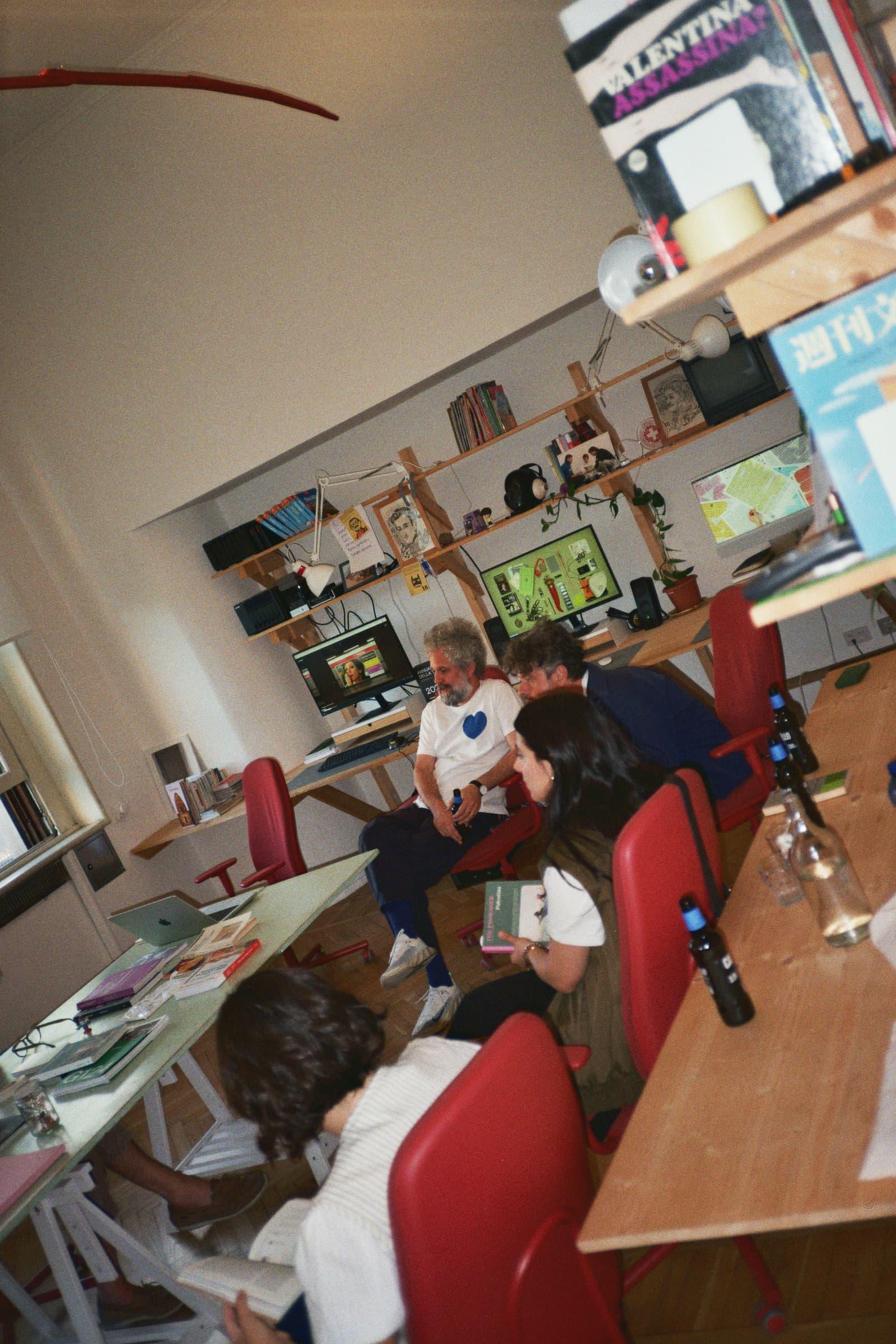
That principle ran through the work they showed us. In The Passenger, an editorial series that started as monographs on countries, each issue is built around its own color, a small early decision that, forty issues in, has become a whole system to keep alive. In 999 domande sull'abitare contemporaneo, an exhibition built from 999 questions about living, each contributed by a different person as a photo and a short video, the raw, uneven quality of the material wasn't a problem to fix but the whole point, proof that a system can hold together even when what feeds it is messy, as long as the structure underneath is solid. Propp's own contribution to the show was a video installation reproducing 64 rooms, designed and built in two weeks flat.
We closed the evening talking about what it means to run a studio today, how a project's value isn't proportional to the size of the client, and how the smaller, less glamorous work often leaves the deepest mark. Their advice for anyone starting out: don't wait for the perfect moment, just start; and choose to work with people who complete you, not just people you get along with.
Maybe that's the real lesson of propp: a studio isn't just people sharing a room, it's different paths that took twenty years to actually converge, brought together by choice rather than by plan. As Munari used to say — do to understand, understand to adjust, adjust to keep going. Not a bad way to think about a career that hasn't found its final shape yet either.