Loading journal
Articles
Why do young graphic designers gravitate towards editorial design?
Fabio Mario Rizzotti
25 February 2025
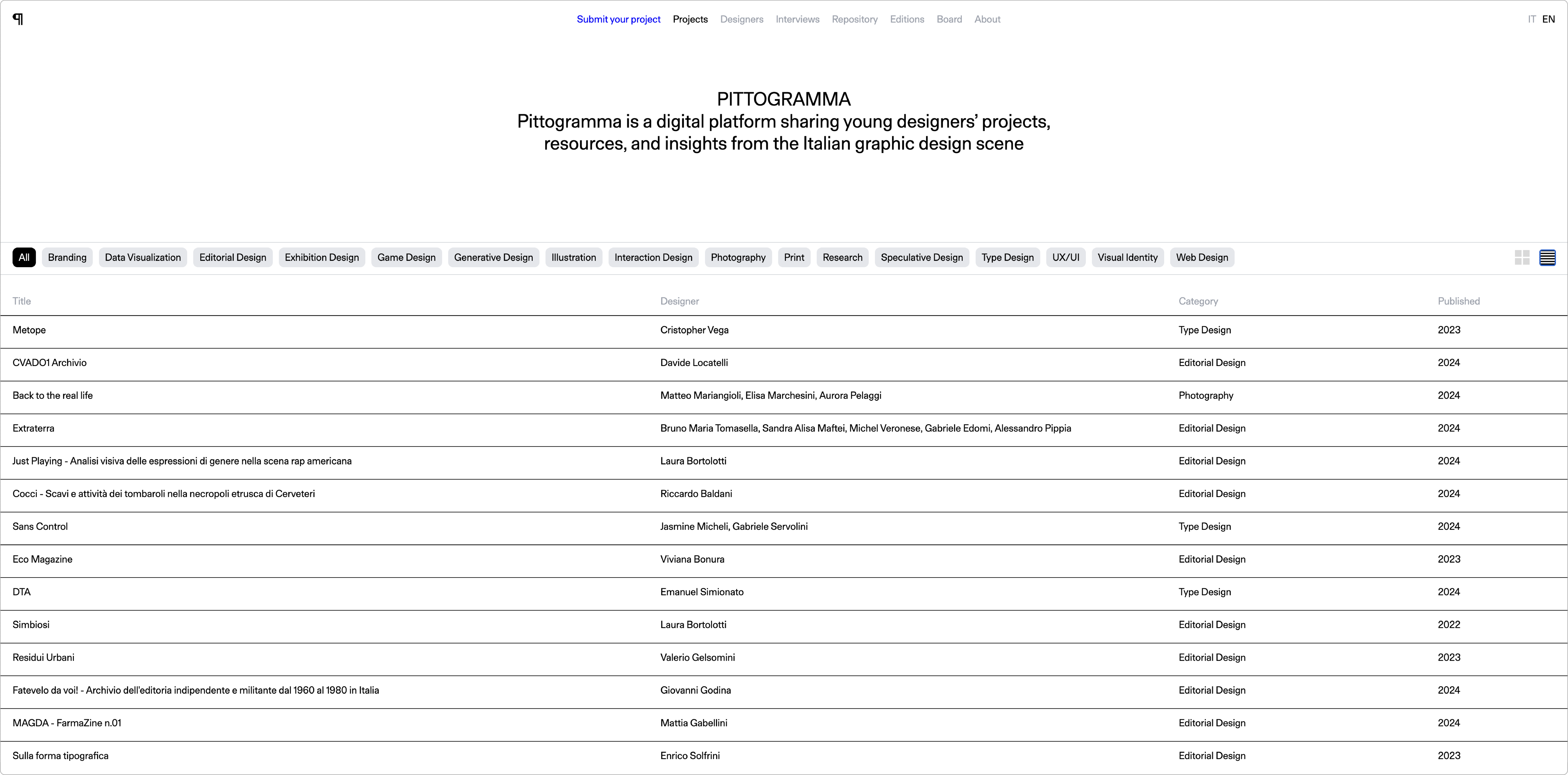
A few months after launching our platform, we quickly noticed that most of the projects we received and published were predominantly editorial.
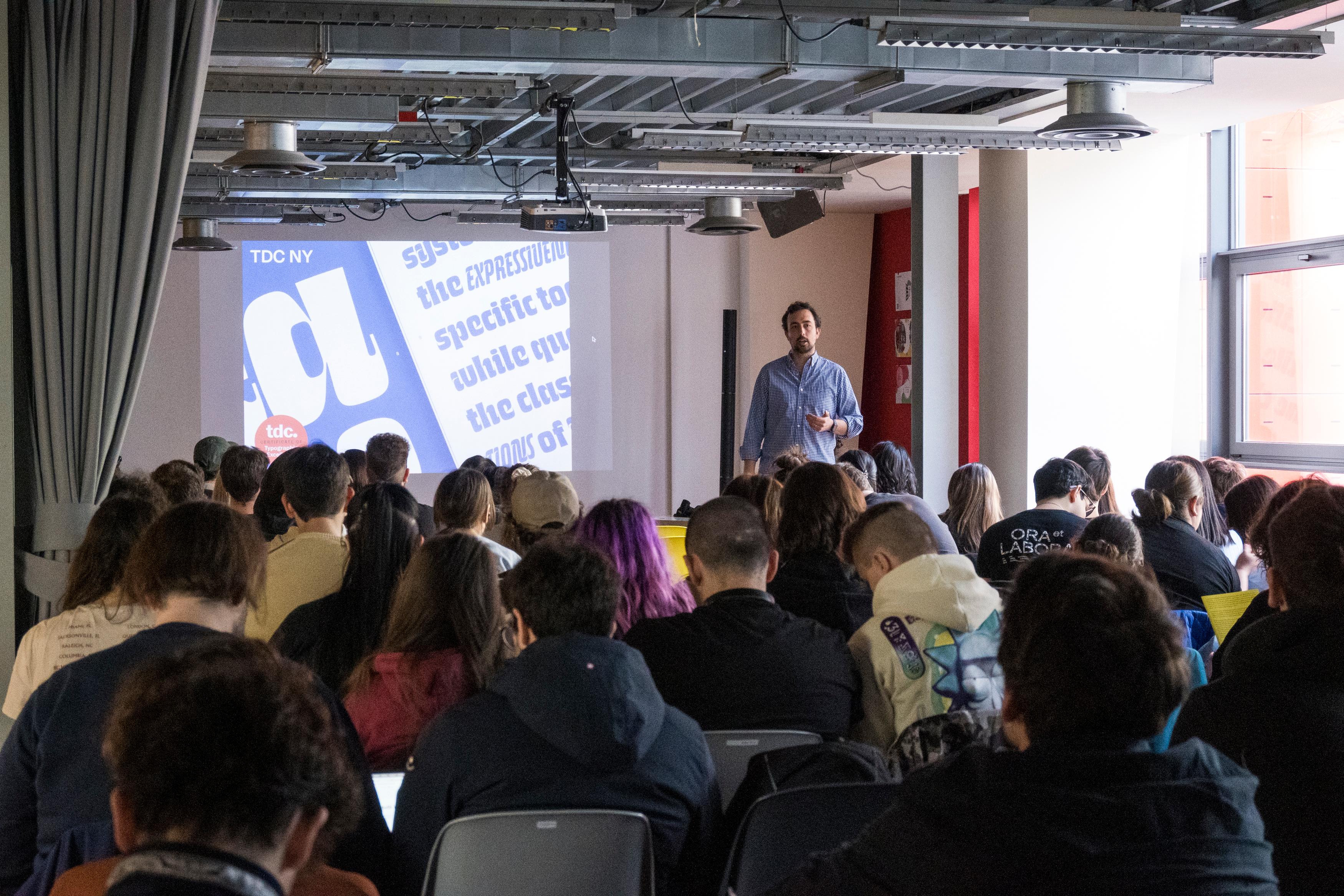
Since then, we’ve been questioning ourselves: Why is this happening? Are we communicating something incorrectly? Does the platform—or even Pittogramma as a whole—come across as focused solely on editorial projects? Recently, Fabio Mario Rizzotti, the founding partner of Pittogramma, began asking his students at RUFA (Rome University of Fine Arts) about their impressions of the platform. We also sought feedback from students we met while giving lectures at NABA (Nuova Accademia di Belle Arti) and IUAV (Università di Venezia).
Their feedback revealed no specific reason for the trend. However, the abundance of editorial projects on our platform seemed to create the impression that only editorial projects were suitable for submission.
Beyond this feedback, we discussed other possible explanations internally, reflecting on the educational landscape we’ve observed during our travels and workshops at various universities and institutes across Italy. One major issue we’ve identified is that graphic design education in Italy, compared to other countries, is outdated. Bachelor’s and master’s programs continue to train designers using traditional methods, without adequately preparing them for the contemporary landscape where web design, creative coding, 3D, artificial intelligence, and motion design are fundamental to modern design practice.
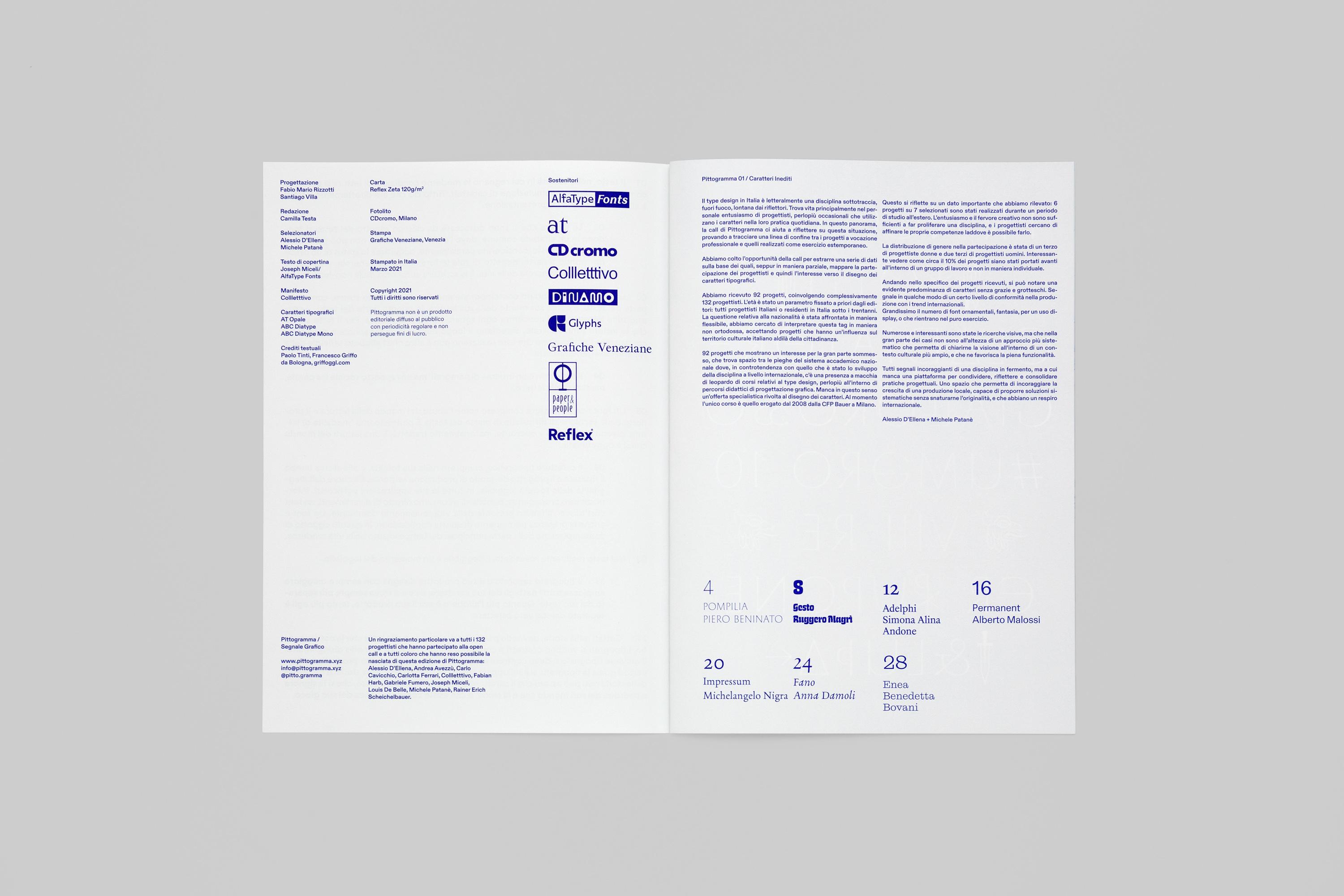
We previously highlighted a similar issue within type design after releasing our second issue, “Pittogramma 01 - Caratteri Inediti”, where we mapped the state of type design education in 2021. Our findings, together with the curators Alessio D’Ellena and Michele Patanè, revealed a significant educational gap in type design that persists today. For example, six out of seven student projects we published were from designers studying abroad, while the remaining designer was self-taught and based in Spain. In contrast, countries like Switzerland and the Netherlands offer dedicated type design courses, whereas in Italy, only evening classes or weekend workshops are available.
Now, consider this: If type design—a historically significant discipline—struggles to find space in the curriculum, what does that mean for emerging fields like creative coding or artificial intelligence in design? This issue is compounded by the fact that many companies and institutions in Italy are not accustomed to including typeface design in their rebranding efforts. Additionally, many leading studios and agencies are run by veteran creative directors who are unfamiliar with contemporary design disciplines. However, if you look at recent projects by Milan-based agencies like Landor and AUGE, you can see how innovative type design, or motion 3D, can bring new life to projects.
This brings us to a provocative question: What would happen if clients and creative directors fully embraced new technologies? How would traditional design studios and the graphic design landscape in Italy adapt? Perhaps this shift could help us align with countries that are more advanced and seen as industry leaders.
Returning to our initial question—Why is editorial design so popular among young graphic designers?—we noticed that about 95% of the projects we receive are thesis projects. Thesis work often results in publications because, culturally, we continue to view books as significant historical artifacts and keepers of history. Beyond that, they are easier to archive, fit neatly on a bookshelf, and are convenient to consult.
However, we also believe that students aren’t being taught how to effectively document their projects in digital formats. For example, we once received an interesting and well-designed way-finding project, but the only documentation provided was images of the guidelines book. Without examples of how the system would be applied—even as vector-based, two-dimensional visuals—it was impossible for us to understand its functionality. This highlights a broader issue: students often lack the skills to document and present their projects with compelling storytelling.
Ultimately, the prevalence of editorial design submissions seems to be influenced by a combination of cultural perceptions, educational practices, and our platform's existing content. By understanding and addressing these factors, we hope to inspire a more diverse range of submissions.
To wrap up, while we recognise the need to enhance our communication, we also want to offer some advice to young graphic designers: Books are a wonderful medium. Even if you’re a fully digital designer, chances are you’ll still end up collecting books you’ve never actually read. However, today’s graphic designers need to be well-rounded creators—designers of experiences for brands—where books are just one small part of the bigger picture.
So, explore new dimensions of design, beyond just the graphic elements. Think beyond paper because, while books have limitations, digital outputs do not. If we want to grow and evolve as designers, we need to push our boundaries. Who knows? You might come back to designing books one day—but with a completely new perspective.
“I do not think every designer needs to know code, but I think they need to know how code feels like and needs to know what the tools are”
Zach Lieberman, 1st June 2020, Design Interview 1Q
We encourage young designers to challenge themselves, explore new mediums, and share a broader variety of projects on our platform. By doing so, they can not only expand their own creative horizons but also help reshape the narrative of contemporary design in Italy.
Nonetheless, let's be clear: We still hold books in high regard.