Pittogramma — HomePittogramma Mark
  • Journal
  • Events
  • About
Submit your project
Loading projects

Projects

FilterNewest first
  • Submit your project
  • Contribute to the index
  • Report an issue
  • Instagram
  • LinkedIn

Newsletter

© 2026 Pittogramma. All Rights Reserved.

  • Legal Notice
  • Privacy Policy
  • Cookie Policy
  • Submission Terms
Loading project
Project

Institute

Teacher

Year

Disciplines

ShareCopy Link
LinkedIn
Pinterest
X
WhatsApp

Discover More

Project

DETTAGLI - Come il taglio influenza l'esperienza visuale

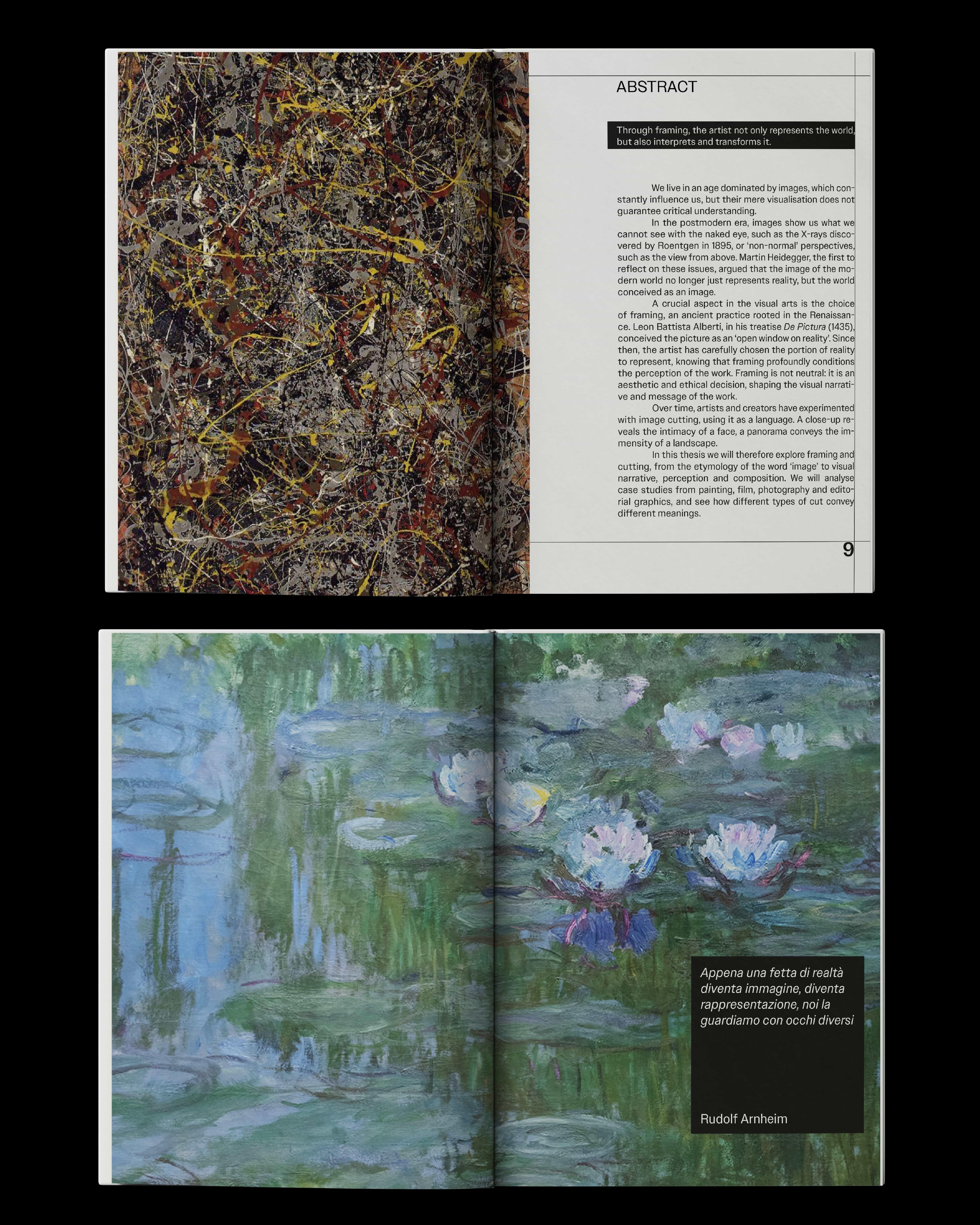
We live in an age dominated by images, which constantly influence us, but their mere visualisation does not guarantee critical understanding.

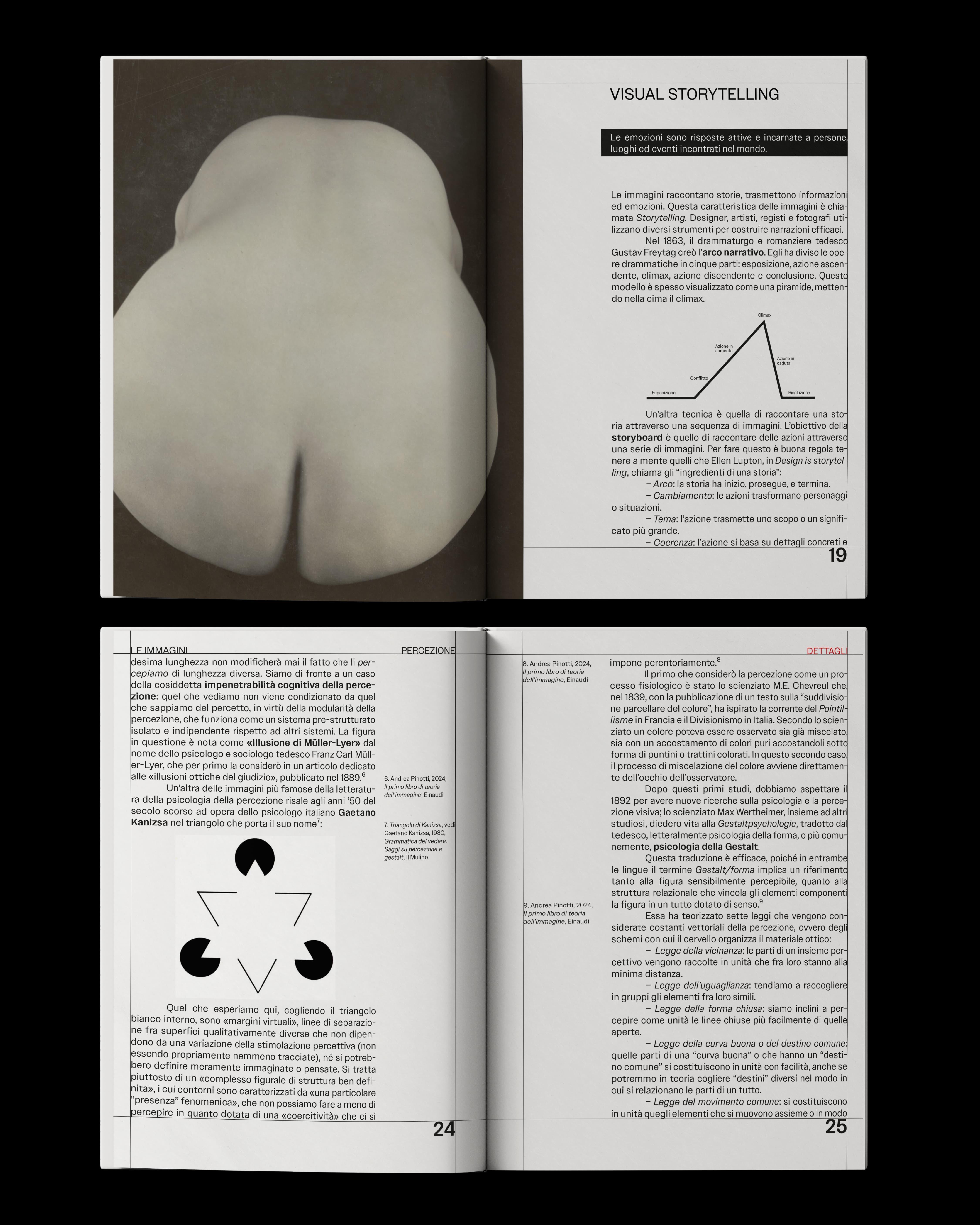
In the postmodern era, images show us what we cannot see with the naked eye, such as the X-rays discovered by Roentgen in 1895, or ‘non-normal’ perspectives, such as the view from above. Martin Heidegger, the first to reflect on these issues, argued that the image of the modern world no longer just represents reality, but the world conceived as an image.

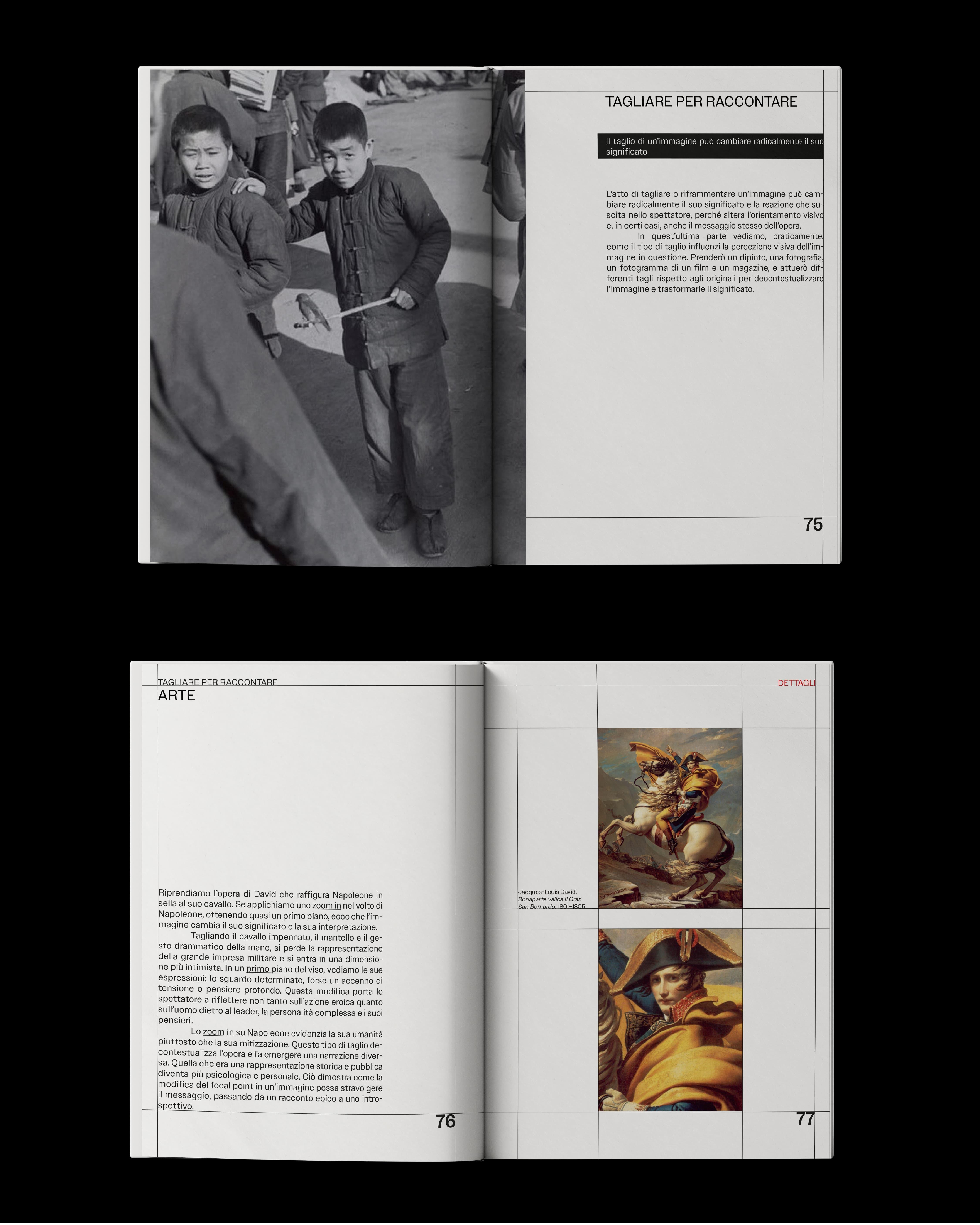
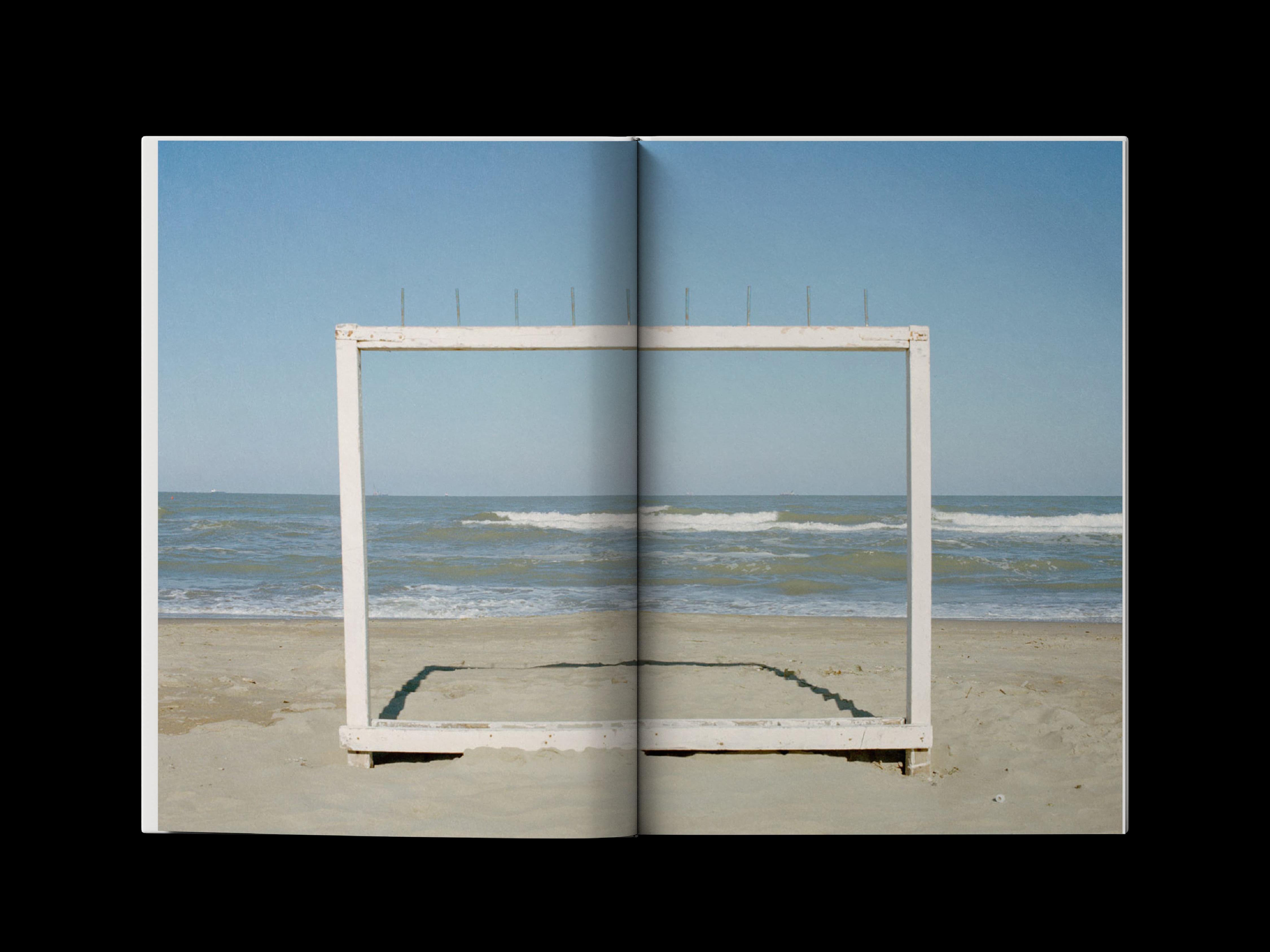
A crucial aspect in the visual arts is the choice of framing, an ancient practice rooted in the Renaissance. Leon Battista Alberti, in his treatise De Pictura (1435), conceived the picture as an ‘open window on reality’. Since then, the artist has carefully chosen the portion of reality to represent, knowing that framing profoundly conditions the perception of the work. Framing is not neutral: it is an aesthetic and ethical decision, shaping the visual narrative and message of the work.

Over time, artists and creators have experimented with image cutting, using it as a language. A close-up reveals the intimacy of a face, a panorama conveys the immensity of a landscape.

In this thesis we will therefore explore framing and cutting, from the etymology of the word ‘image’ to visual narrative, perception and composition. We will analyse case studies from painting, film, photography and editorial graphics, and see how different types of cut convey different meanings.
Institute
Accademia di Belle Arti di Catania
Teacher
Marco Lo Curzio
Year
2024
Disciplines
  • Editorial Design
  • History
Two white Dettagli posters with black grids and small photographic squares.
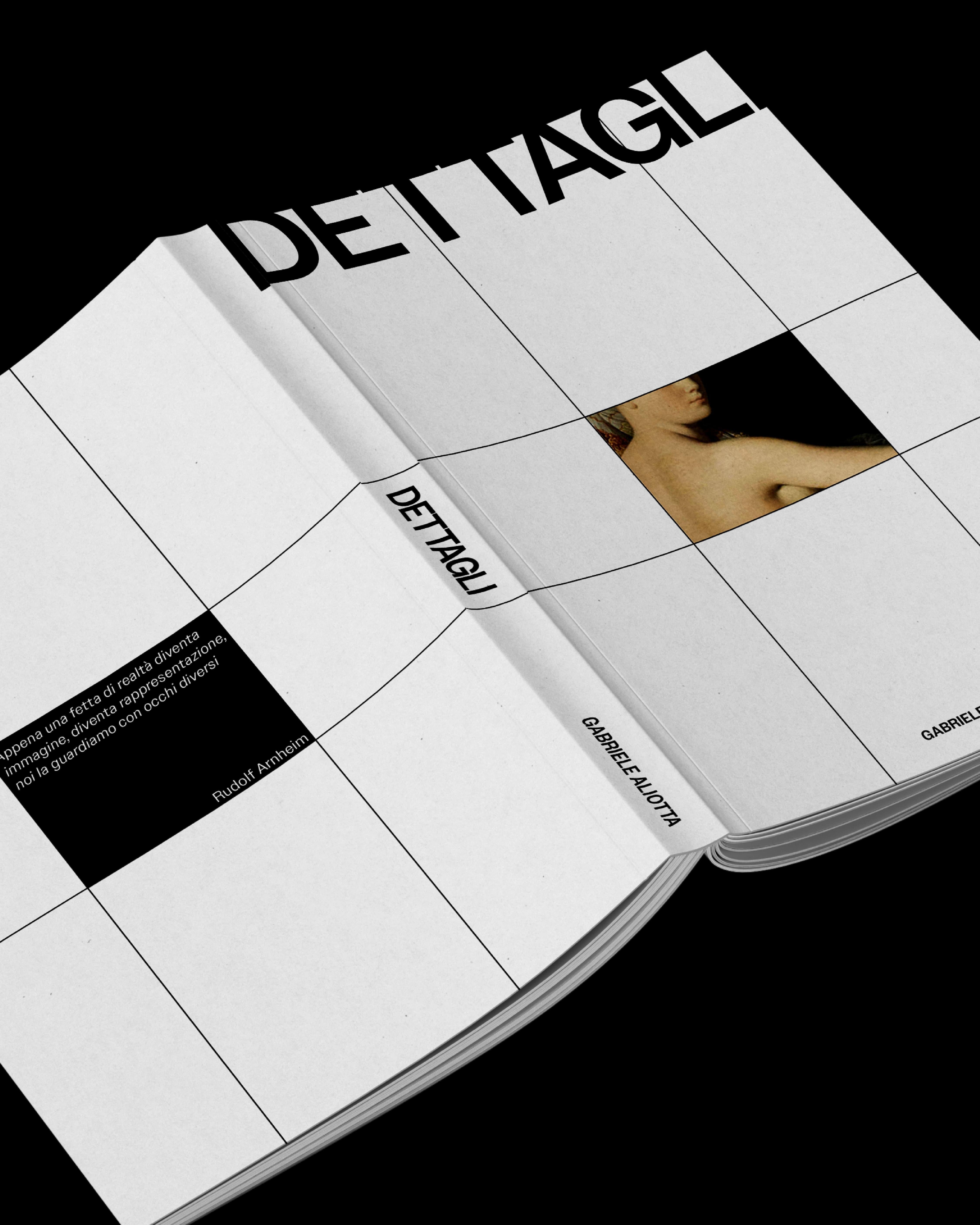
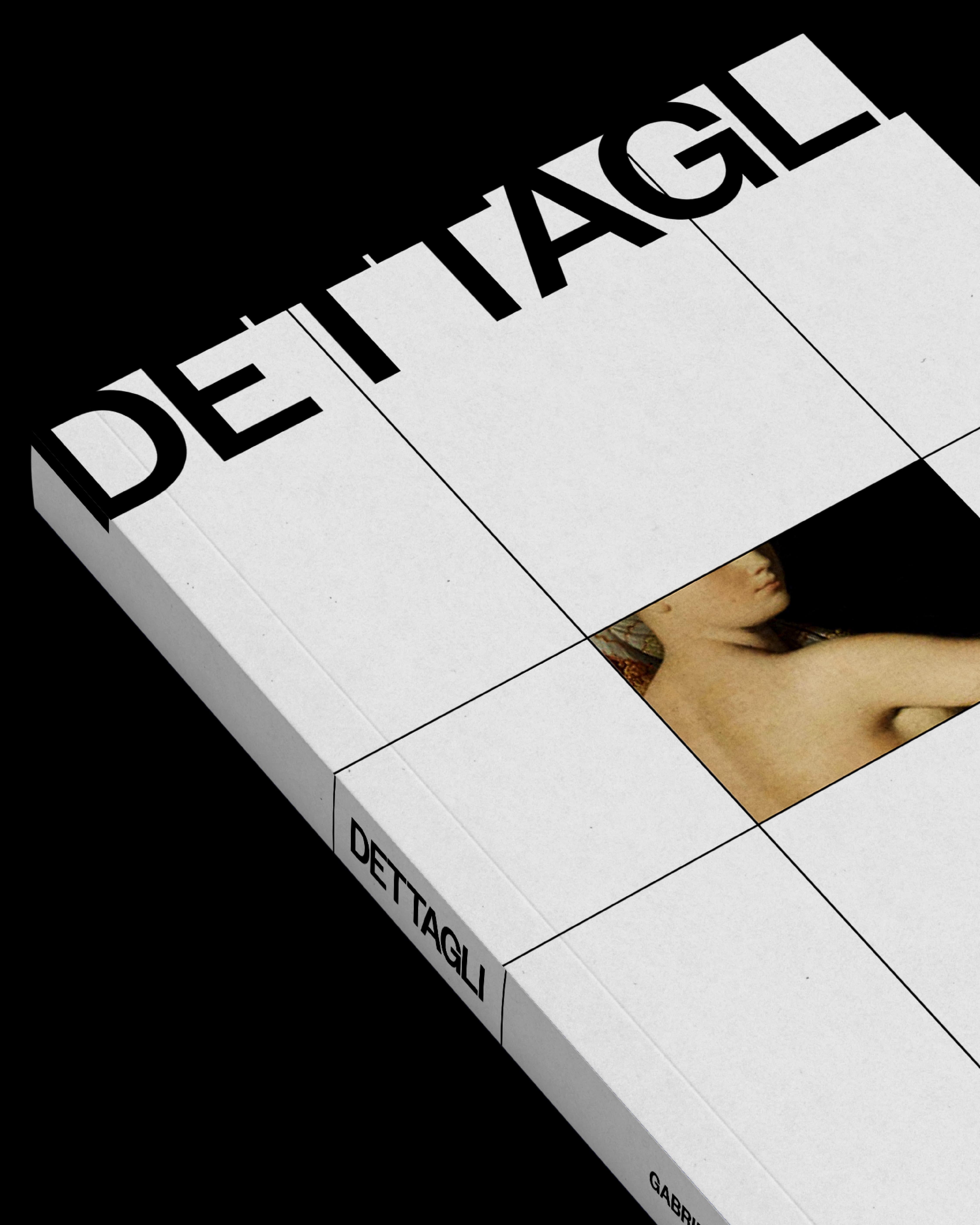
Angled view of the white DETTAGLI book cover with a gridded layout and a small photographic cutout of a person’s torso.
Open white DETTAGLI book showing the gridded cover, title, author name, and a small photographic cutout.
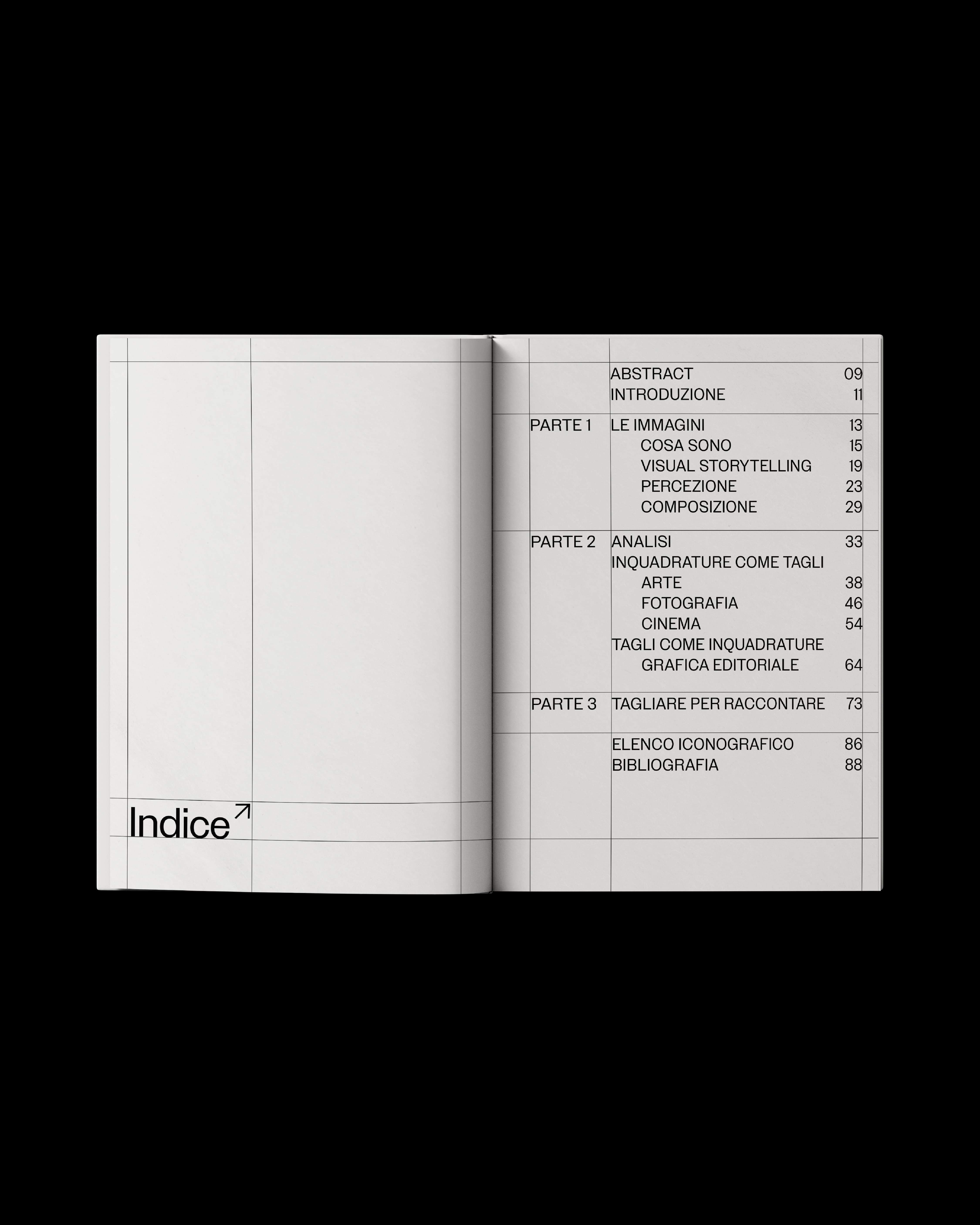
Open DETTAGLI book showing a sparse table of contents on a gridded white spread.
Open DETTAGLI spread pairing an abstract splattered painting and a water-lily painting with explanatory text.
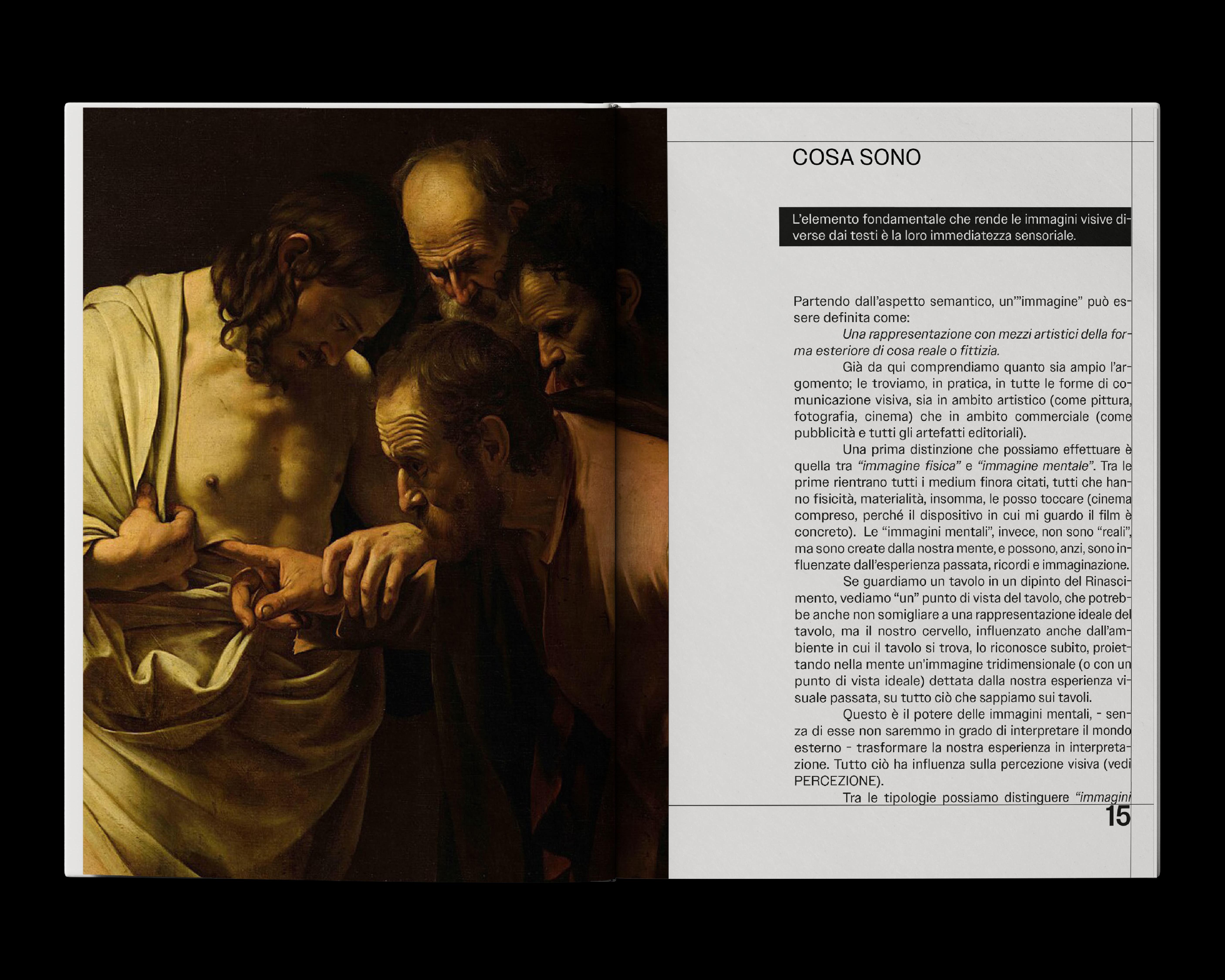
DETTAGLI spread showing a detail of Caravaggio’s The Incredulity of Saint Thomas beside Italian text.
Open spread with a monochrome photograph of a person’s back beside visual-storytelling text and a diagram.
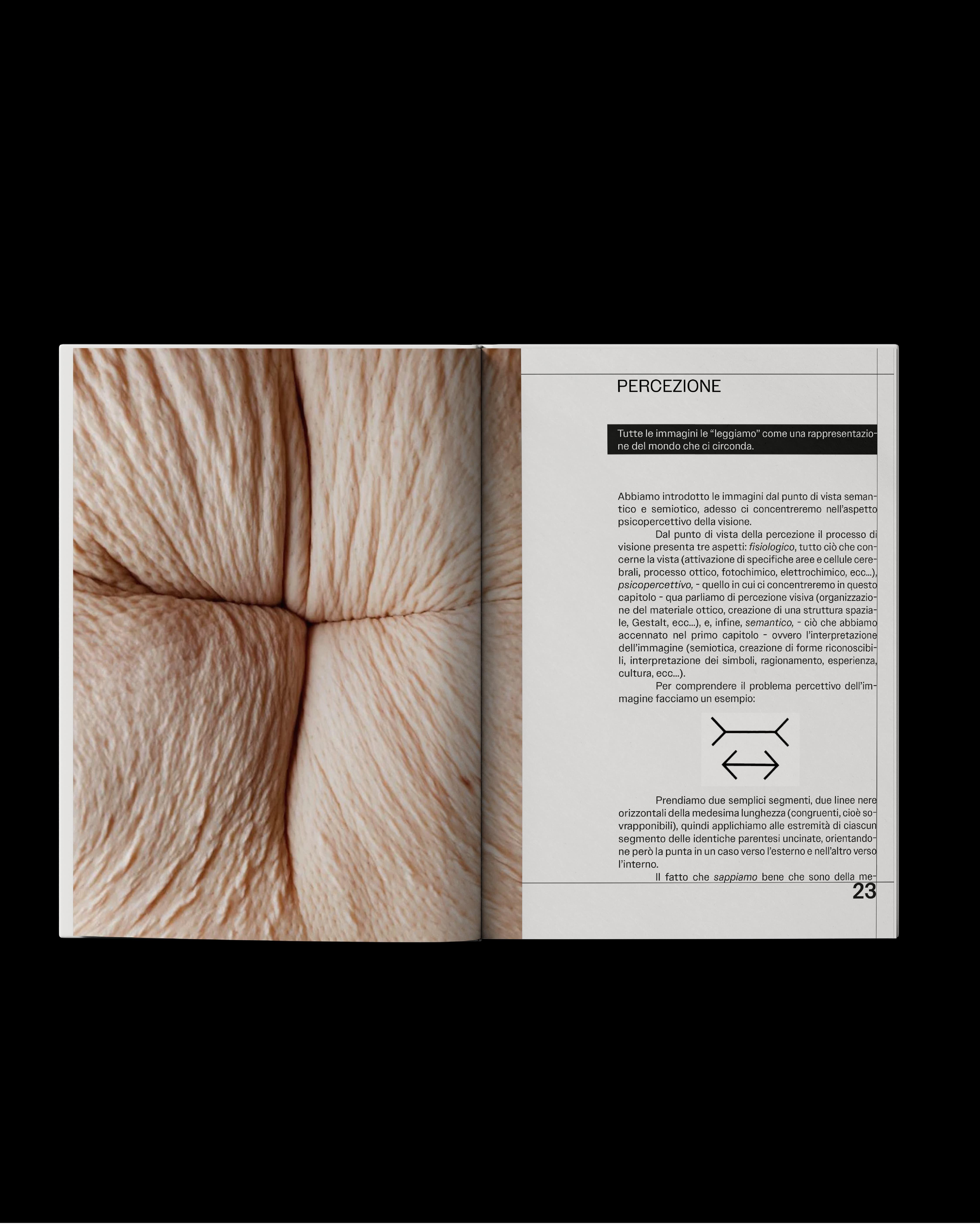
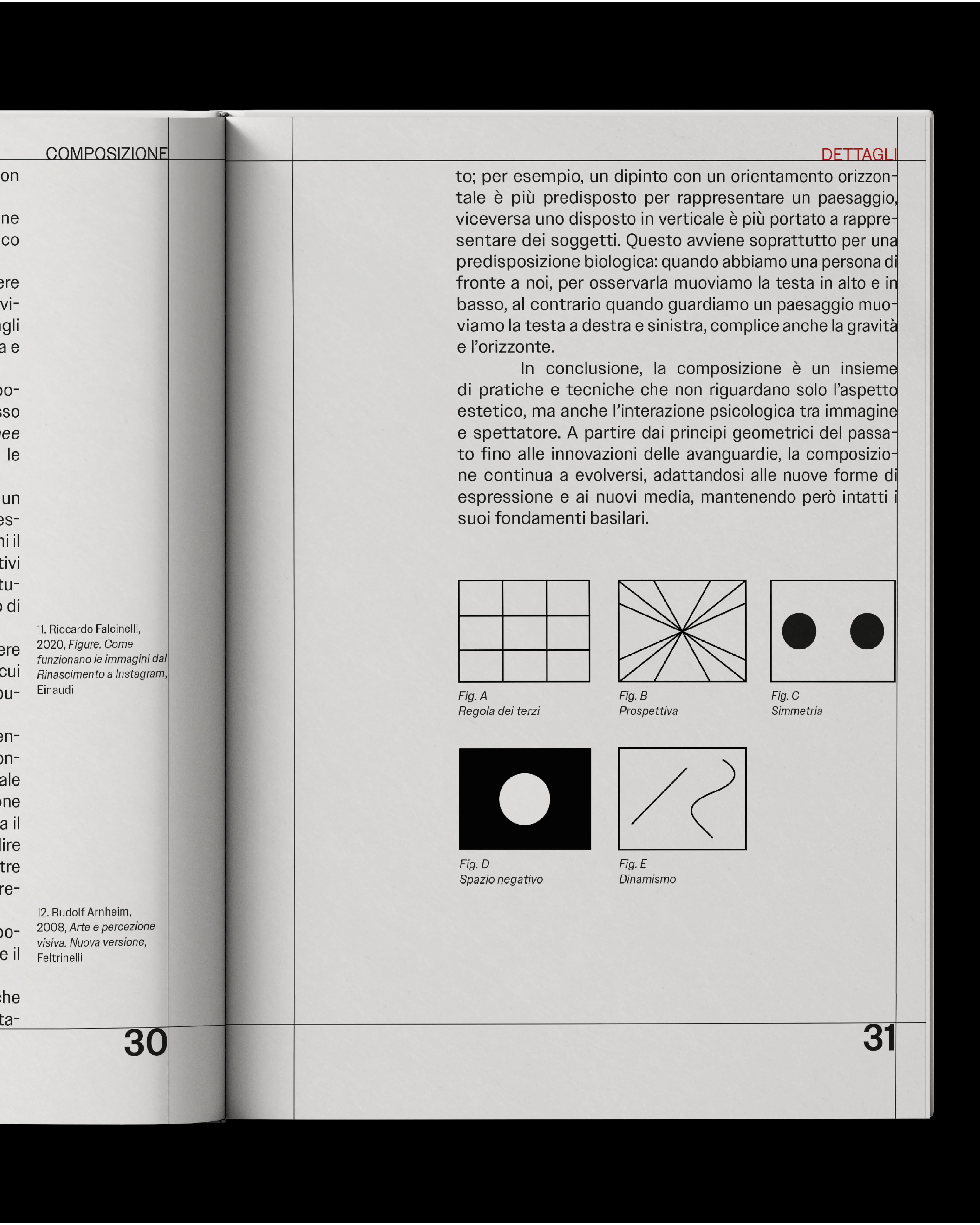
Spread with two text-heavy pages explaining images and perception, including black geometric shape diagrams.
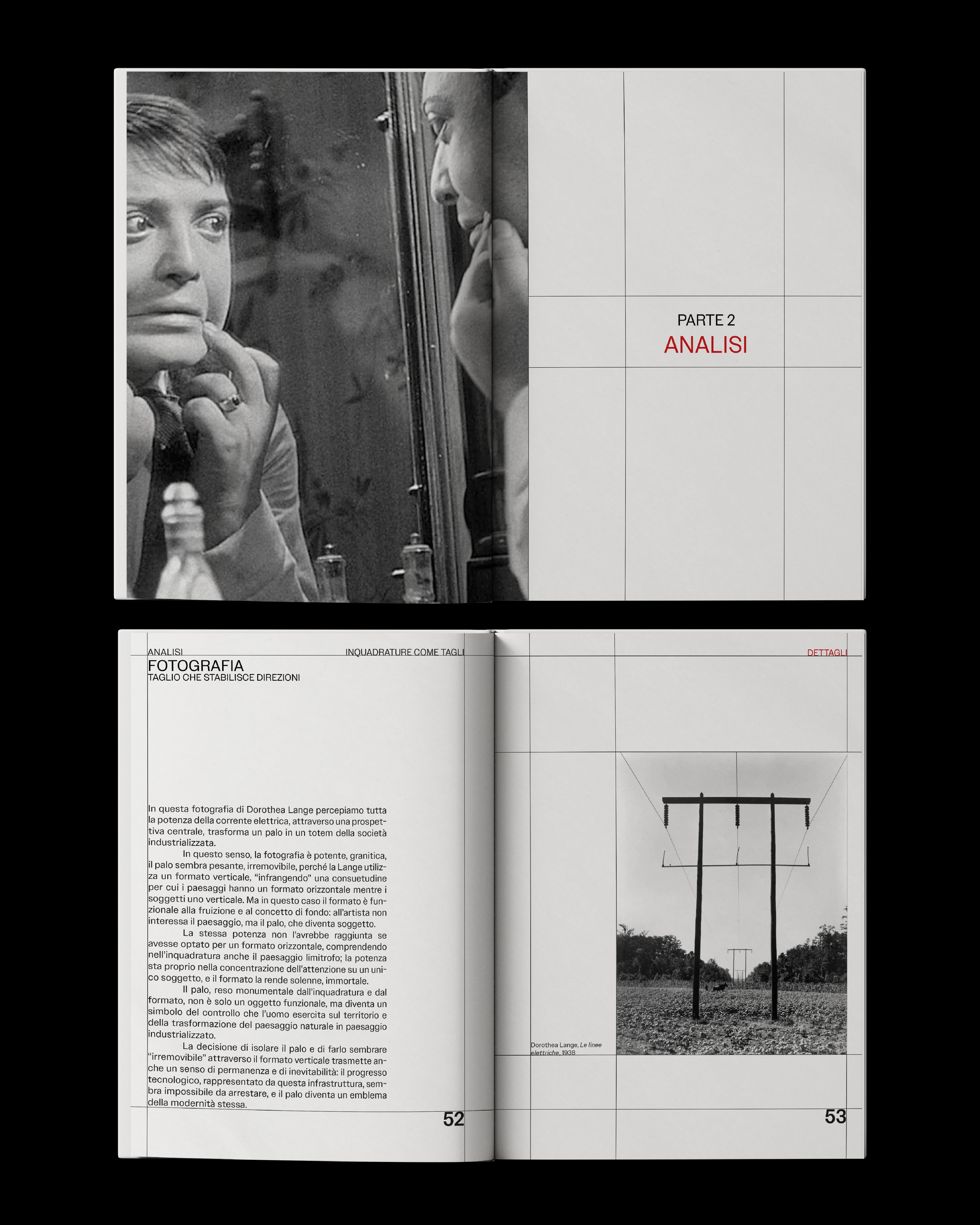
Black-and-white photograph of a child looking into a mirror beside a chapter divider labeled ANALISI.
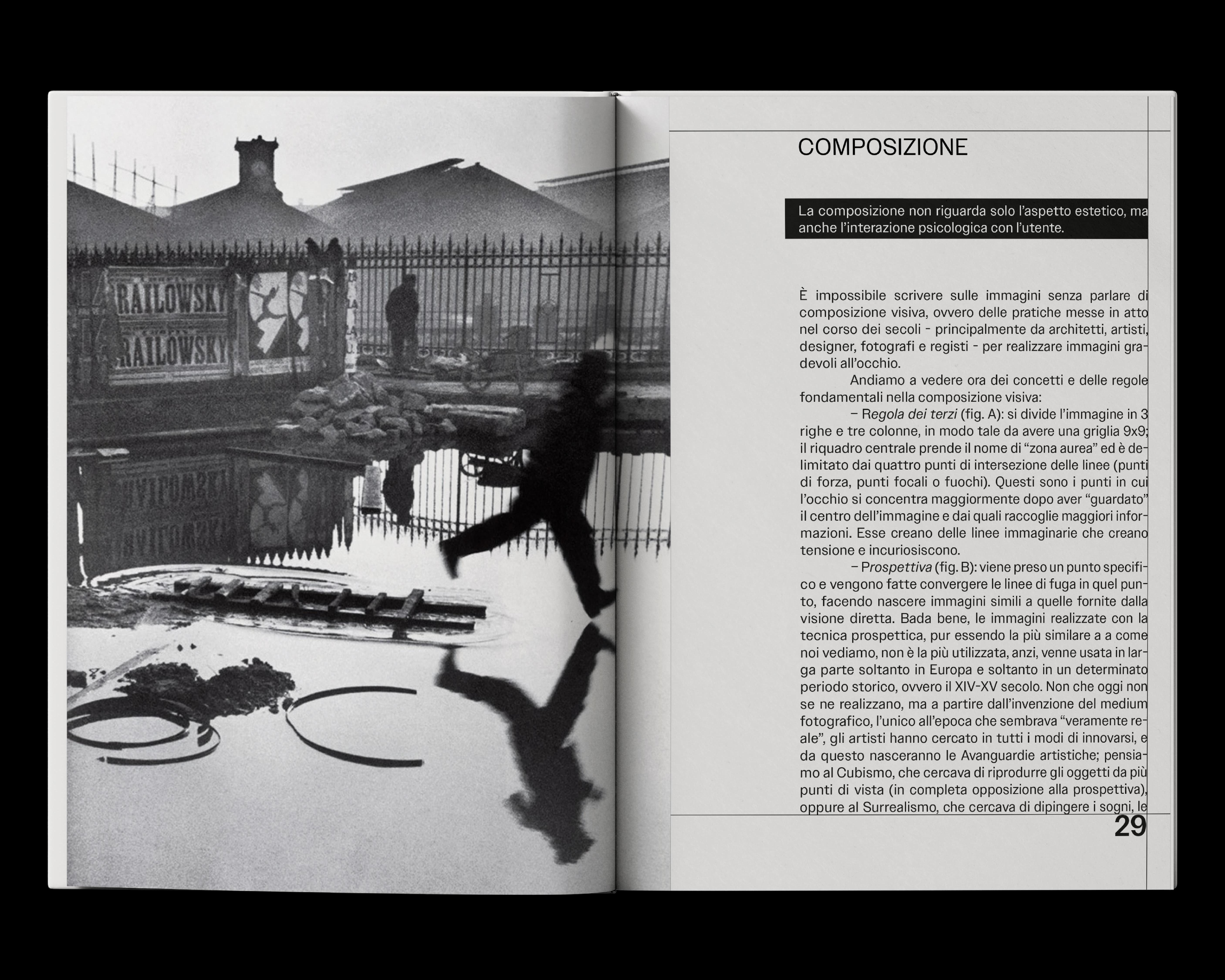
Black-and-white photograph of a person running past a fence and puddle with reflected billboards beside composition text.
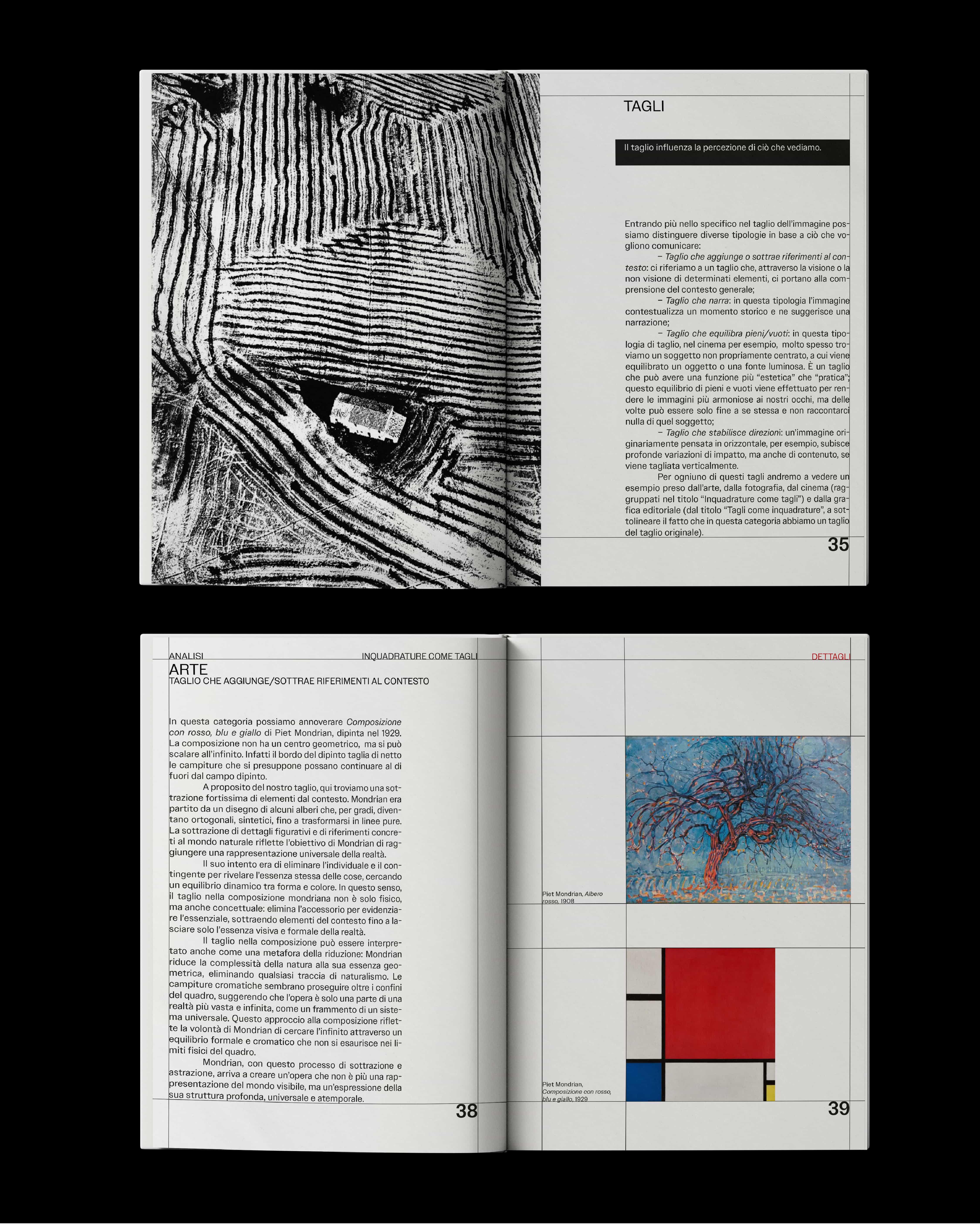
High-contrast close-up of folded striped fabric with a small object in its center beside text labeled TAGLI.
Spread pairing explanatory text with a colorful tree painting and a Mondrian-style geometric composition.
Open spread with explanatory text, a black-and-white photograph of children, and two classical-style paintings.
Open DETTAGLI spread pairing a black-and-white photograph of children with text and two classical-style paintings.
Share
LinkedInPinterestXWhatsApp

Discover More

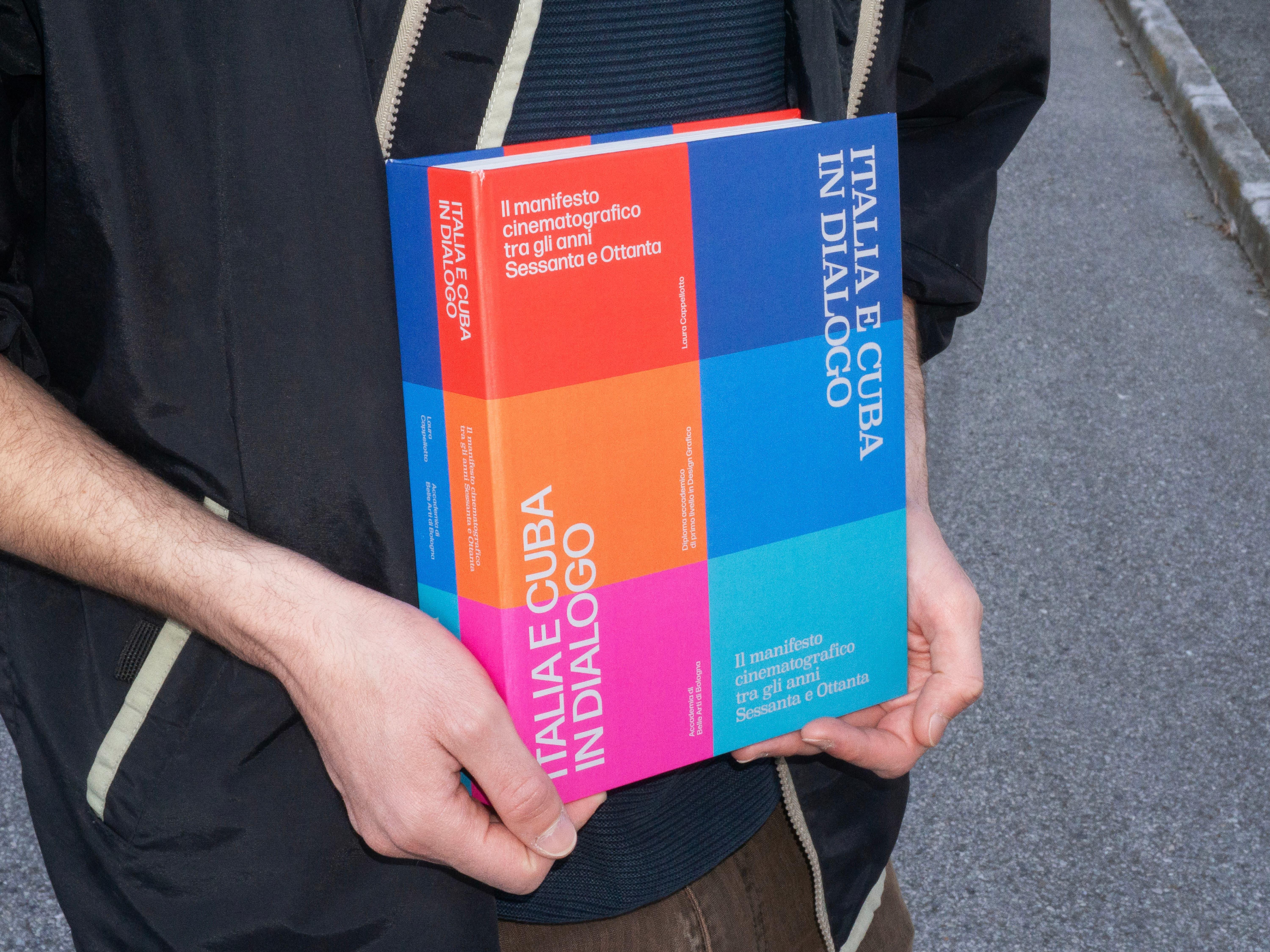
A person in a dark jacket holds the book Italia e Cuba in dialogo against their body. The cover and spine are made of bold blocks of red, blue, orange, magenta and turquoise, with the title in large white capitals.

Italia e Cuba in dialogo – Il manifesto cinematografico tra gli anni Sessanta e Ottanta

Laura Cappellotto

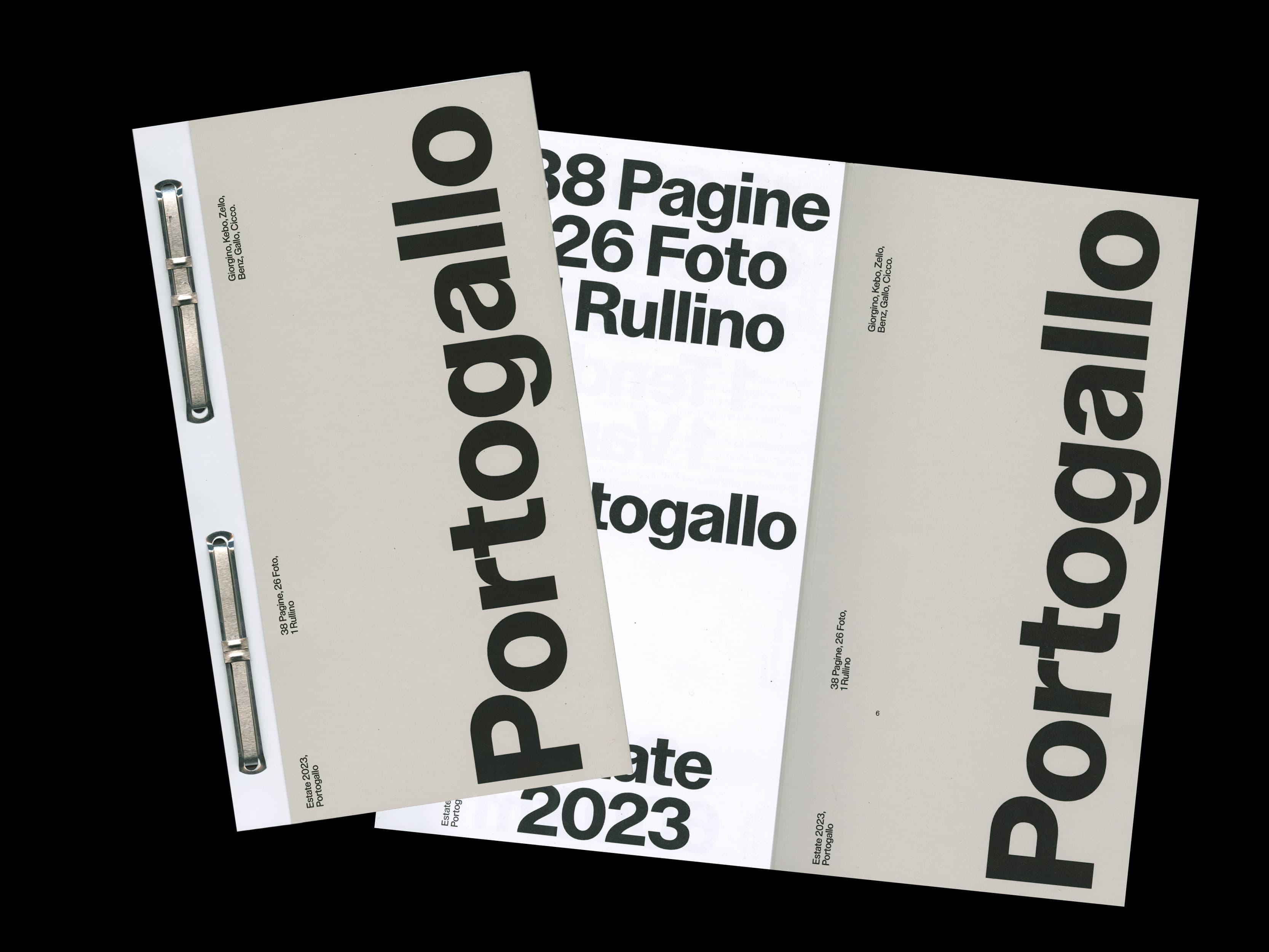
The booklet Portogallo, Estate 2023: a grey archive-style cover with metal clips and large vertical type, and an open page listing its numbers.

Portogallo, Estate 2023

Tommaso Ciccotti

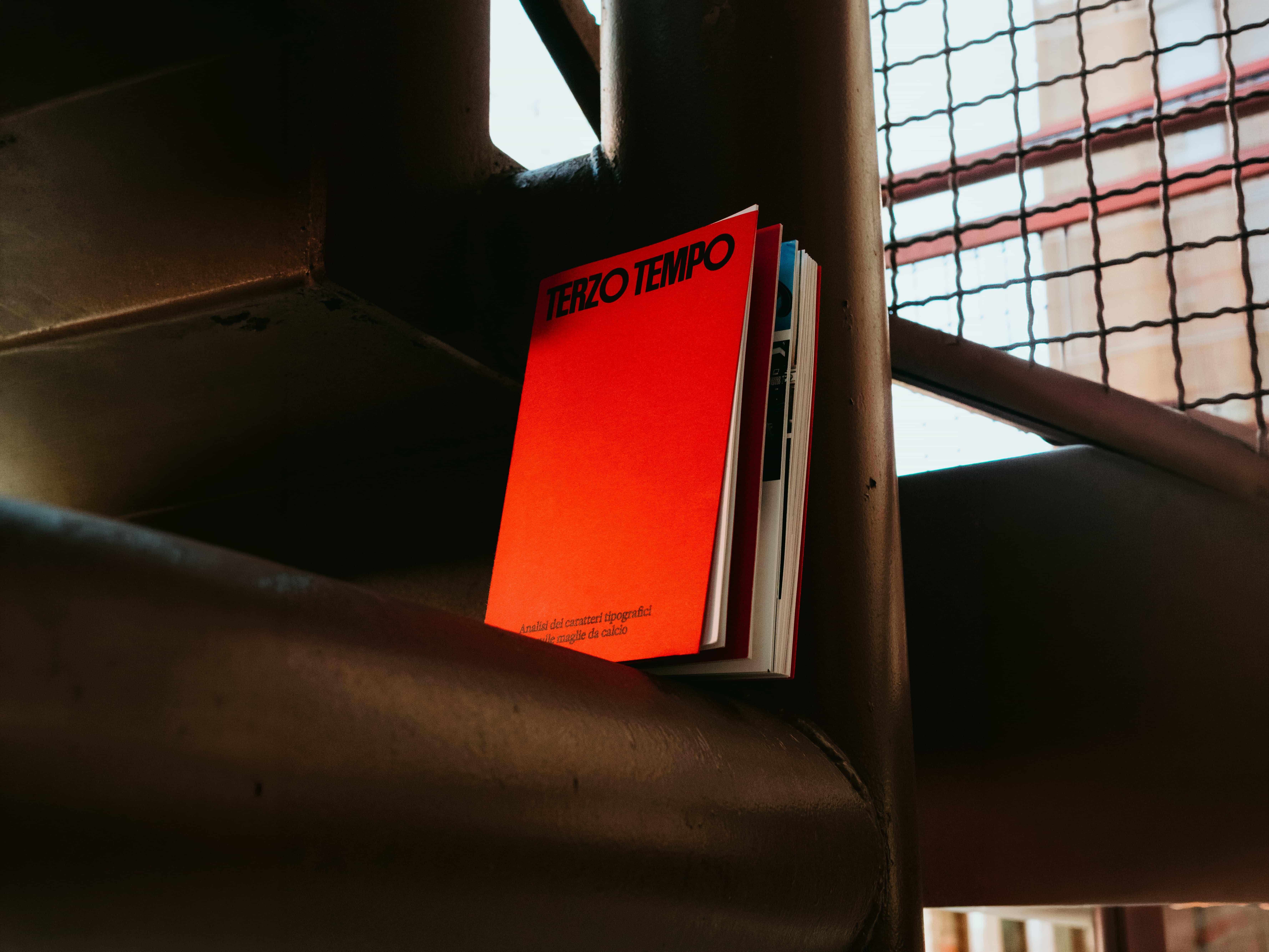
Terzo Tempo, a book with a bright red cover and bold black title, standing on a dark metal stair beam beside a mesh railing.

Terzo Tempo – Analisi dei caratteri tipografici sulle maglie da calcio

Lorenzo Bertozzi

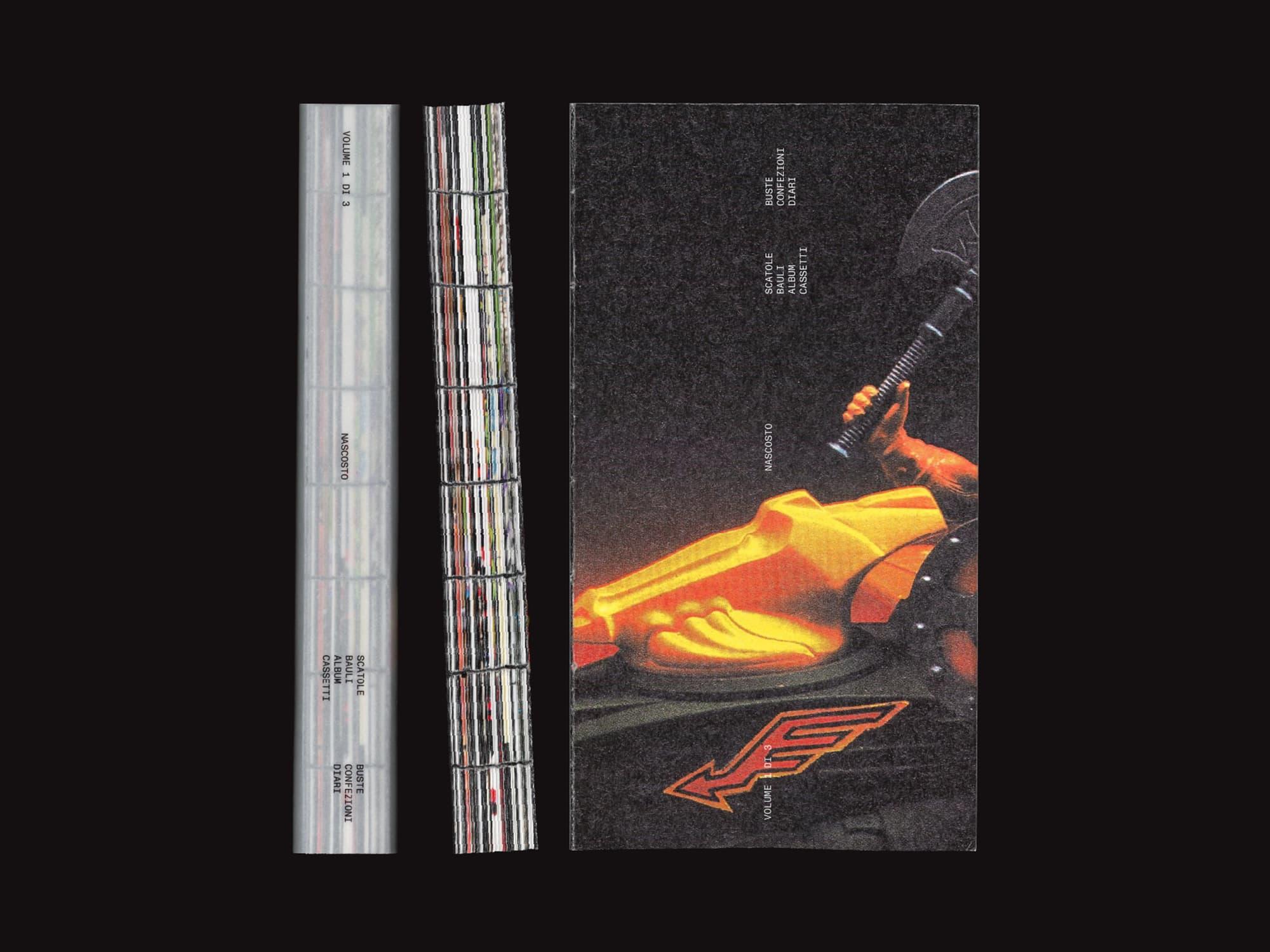
NASCOSTO vol. 1: translucent spine, exposed sewn binding and front cover with a close-up of a yellow toy figure holding an axe, on a black background.

NASCOSTO vol. 1

Giacomo Zanarelli, Simone Cominelli